

Imagine walking across a manufacturing floor, touching a workbench, and feeling a tiny, sharp zap. Static electricity is invisible, but even a discharge of a few dozen volts can damage sensitive electronic components or disrupt critical manufacturing processes. ESD flooring is designed to control and safely dissipate this static electricity before it becomes an expensive problem.
What is ESD Flooring?
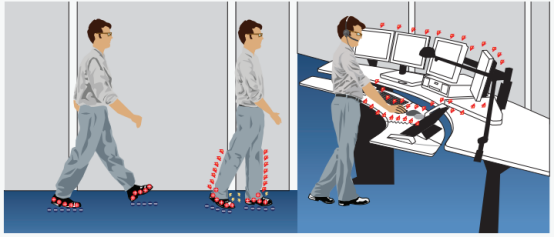
ESD stands for Electrostatic Discharge. ESD flooring is a specialized flooring material designed to prevent the build-up of static electricity on people and equipment. It works by grounding static charges, pulling them away from sensitive electronics, and safely dispersing them into the earth.
How Does It Work?
ESD flooring contains conductive particles, such as carbon or graphite fibers, embedded within its material.
- Collection: When a person walks or a cart moves across the floor, the floor locks onto the static charge.
- Flow: The conductive elements create a continuous pathway for the electricity to travel.
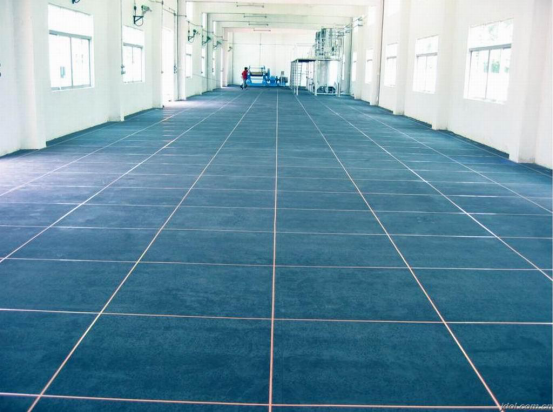
- Grounding: The electrical charge flows down through the floor and into a copper grounding strip connected to the building’s earthing system.
Key Types of ESD Flooring
There are two primary categories of ESD flooring based on their electrical resistance levels:
Conductive Flooring: Features very low electrical resistance. It drains static charges instantly and is ideal for highly sensitive environments like explosives manufacturing or semiconductor cleanrooms.
Dissipative Flooring: Features moderate electrical resistance. It drains charges at a slower, controlled rate, making it perfect for electronics assembly, server rooms, and standard industrial spaces.

Industry Standards & Performance
In ESD-protected areas (EPAs), flooring performance is commonly evaluated according to international standards such as ANSI/ESD S20.20, IEC 61340-5-1, and ANSI/ESD STM7.1, which define electrical resistance requirements and test methods for electrostatic control systems. Meeting these standards ensures that the flooring provides reliable, long-term protection against static events.
Frequently Asked Questions (FAQ)
- Can ESD flooring work without grounding?
- No, it cannot. Without a proper connection to the building’s ground earth via copper strips, the static electricity has nowhere to go. It will simply accumulate on the floor’s surface, rendering the system useless.
- What is the difference between conductive and static dissipative flooring?
- The main difference is the speed of charge dissipation, determined by electrical resistance. Conductive flooring has lower resistance (typically 10⁴ to 10⁶ Ohms) and drains static instantly. Dissipative flooring has higher resistance (10⁶ to 10⁹ Ohms) and drains charges more slowly and controlled.
- Can ordinary vinyl flooring be used in an ESD-protected area?
- No. Ordinary vinyl is an electrical insulator that generates and holds high amounts of static electricity through friction. Using it in an EPA increases the risk of catastrophic static damage to sensitive components.
- How is ESD flooring tested?
- It is tested using specialized megohmmeter kits with heavy, standardized weights (usually 5 lbs). Handheld probes measure surface-to-surface resistance across the floor and surface-to-ground resistance from the floor to the earthing point to ensure compliance with standards.