
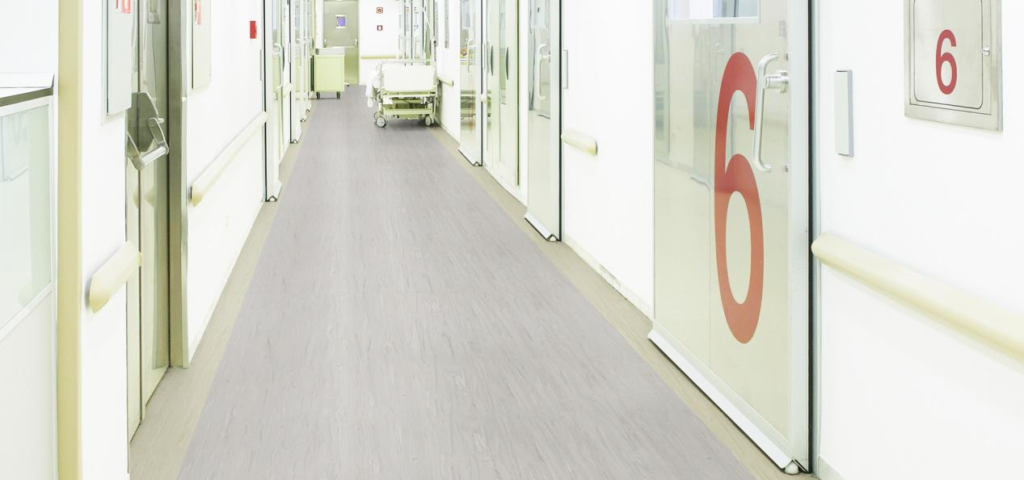
Operating rooms are among the most demanding environments in any healthcare facility. Every material—from wall finishes to flooring—must contribute to infection control, patient safety, and long‑term operational efficiency. While ceramic tiles have traditionally been used in many healthcare buildings, modern hospitals are increasingly choosing Y.H.F homogeneous sheet vinyl flooring for operating rooms and other critical medical spaces.
So, why has this shift happened? This article compares Y.H.F homogeneous sheet flooring and ceramic tiles to help healthcare planners, architects, contractors, and hospital managers make informed flooring decisions.
What Flooring Does an Operating Room Require?
An operating room is exposed to constant foot traffic, heavy medical equipment, chemical disinfectants, and strict hygiene protocols. Flooring must meet several critical requirements:
- Excellent infection control
- Seamless and waterproof surface
- Easy daily cleaning and disinfection
- Slip resistance for staff safety
- Resistance to heavy rolling loads
- Long service life with minimal maintenance
- Compatibility with static control (ESD) when required
Any flooring that creates hygiene risks or increases maintenance costs can affect both operational efficiency and patient safety.
Although ceramic tiles offer high hardness and durability, they have limitations that become significant in sterile medical environments.
1. Seamless Installation Improves Infection Control
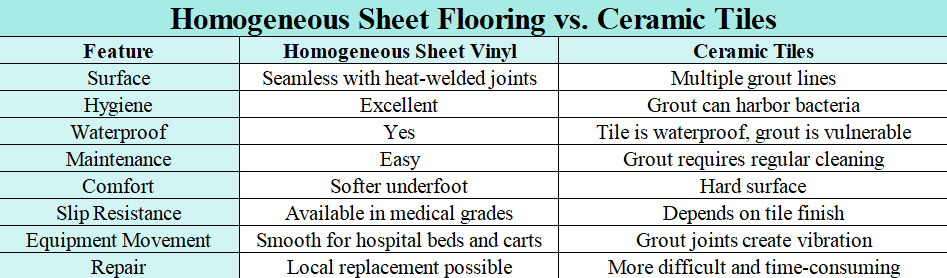
The biggest advantage of Y.H.F homogeneous sheet flooring is its seamless installation.
Sheets are joined using heat welding, creating a continuous floor surface with virtually no gaps where bacteria, moisture, or contaminants can accumulate.
Ceramic tiles, however, require grout joints between every tile. Even when sealed, grout can:
- Absorb moisture over time
- Trap dirt and biological contaminants
- Become difficult to disinfect completely
- Crack and deteriorate after years of use
Because infection prevention is one of the highest priorities in operating rooms, seamless flooring significantly reduces cleaning complexity.
2. Easier Cleaning and Faster Disinfection
Operating rooms undergo frequent cleaning using hospital-grade disinfectants.
Homogeneous sheet flooring provides a smooth, non-porous surface that allows staff to:
- Remove blood and bodily fluids quickly
- Use automated cleaning equipment efficiently
- Reduce cleaning time
- Maintain consistent hygiene standards
Ceramic tile grout requires additional scrubbing and periodic maintenance, increasing labor costs over the life of the facility.
3. Better Performance Under Heavy Medical Equipment
Operating rooms contain numerous heavy devices, including:
- Surgical tables
- Anesthesia machines
- Imaging equipment
- Mobile workstations
- Patient beds
These devices are frequently moved.
Homogeneous sheet flooring provides a smooth rolling surface that minimizes vibration and wheel resistance.
Ceramic tile grout lines create small but continuous bumps, causing:
- Increased wheel wear
- Equipment vibration
- More difficult movement of hospital beds
- Higher maintenance for rolling equipment
4. Enhanced Safety for Medical Staff
Medical teams often stand for long surgeries lasting several hours.
Compared with ceramic tiles, homogeneous sheet flooring offers:
- Better walking comfort
- Reduced leg fatigue
- Improved slip resistance
- Lower noise levels
Some medical-grade products also provide cushioned backing to improve ergonomic performance without compromising durability.
5. Superior Chemical Resistance
Hospitals regularly use strong disinfectants such as:
- Alcohol-based cleaners
- Chlorine disinfectants
- Hydrogen peroxide solutions
- Quaternary ammonium compounds
High-quality homogeneous sheet flooring is designed to withstand repeated exposure to these chemicals without significant discoloration or surface degradation.
Although ceramic tiles themselves are chemically resistant, grout can deteriorate after prolonged exposure to aggressive cleaning agents.
6. Easier Maintenance Throughout the Flooring Life Cycle
Hospital flooring is a long-term investment.
Homogeneous sheet flooring offers several maintenance advantages:
- No grout repairs
- Simple routine cleaning
- Lower maintenance labor
- Easy localized repairs if damaged
- Lower life-cycle costs
Ceramic tile installations often require:
- Grout cleaning
- Regrouting
- Tile replacement after cracking
- Longer downtime during repairs
7. Better Compatibility with ESD and Healthcare Standards
Some operating rooms require electrostatic discharge (ESD) control to protect sensitive medical equipment.
Homogeneous sheet flooring is available in:
- Static dissipative flooring
- Conductive flooring
- ESD-certified medical flooring
These products provide stable electrical performance while maintaining seamless hygiene.
Achieving the same functionality with ceramic tiles is considerably more complex and typically requires additional conductive systems.
Are Ceramic Tiles Still Used in Hospitals?
Yes.
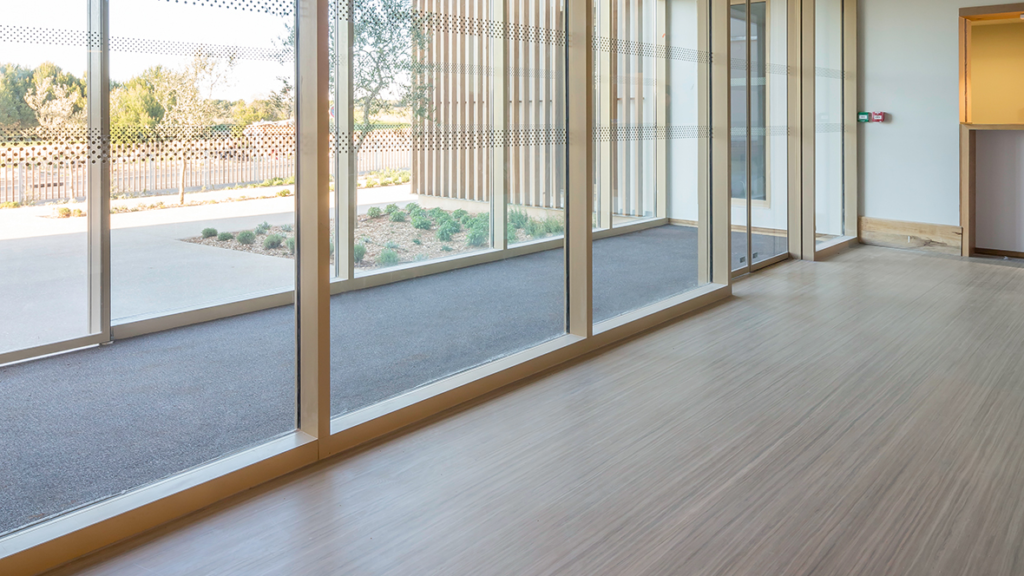
Ceramic tiles remain suitable for many healthcare areas, including:
- Public corridors
- Restrooms
- Cafeterias
- Building entrances
- Utility rooms
However, for environments where infection control and hygiene are critical—such as operating rooms, intensive care units (ICUs), catheterization labs, cleanrooms, and pharmaceutical production areas—homogeneous sheet vinyl flooring is generally the preferred solution.
Which Flooring Is the Better Choice for Operating Rooms?
While ceramic tiles provide durability and an attractive appearance, they cannot match the hygiene performance of seamless Y.H.F homogeneous sheet flooring in critical healthcare environments.
For modern operating rooms, Y.H.F homogeneous sheet flooring delivers: ·Superior infection control · Seamless waterproof installation ·Easier cleaning and maintenance ·Better comfort for healthcare professionals ·Smooth movement of medical equipment ·Long term cost efficiency ·Optional ESD performance for specialized applications.
As hospitals continue to prioritize patient safety, operational efficiency, and compliance with healthcare standards, Y.H.F homogeneous sheet flooring has become the flooring solution of choice for many new medical facilities and renovation projects.