
Strictly speaking, standard PVC polymer resins (raw materials of homogeneous vinyl sheets) are not inherently bio-active or anti-bacterial by themselves. However, high-grade homogeneous vinyl sheet flooring functions as an exceptionally effective anti-bacterial and anti-fungal barrier in medical settings due to its non-porous physical structure, specialized surface treatments, and optional integrated biocide additives.
Because vinyl resins do not provide an organic food source (such as cellulose or sugar) for bacteria, fungi, or micro-organisms, homogeneous sheet flooring is naturally resistant to micro-biological growth when kept clean and dry.
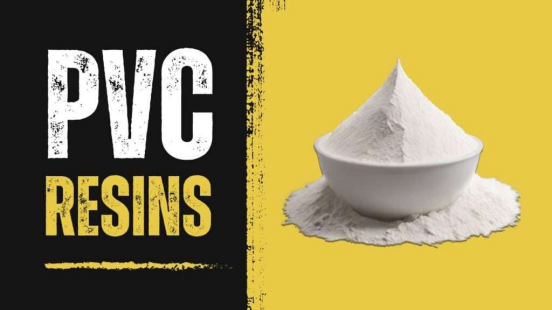
Virgin PVC resins ensuring structural integrity, flexibility, and long-term wear resistance
How Homogeneous Vinyl Prevents Bacterial and Fungal Growth
While pure PVC resin is biologically inert rather than actively anti-microbial, commercial-grade homogeneous sheet flooring prevents microbial colonization through three critical engineering mechanisms:
1. Monolithic Non-Porous Structure & Heat Welding
Bacteria and fungi thrive in dark, moist gaps, joints, and porous surfaces. Homogeneous sheet vinyl is non-porous and installed using heat-welded rods with flash-coving up the wall. This creates a 100% monolithic, seamless floor system that leaves zero micro-crevices for pathogens like MRSA, E. coli, or Aspergillus niger to harbour or proliferate.
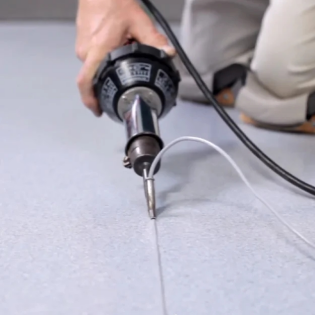
Hot-Welding Installation for Homogeneous Vinyl Sheet
2. High-Density UV / PUR Surface Treatments
Modern homogeneous sheet flooring features a factory-applied, UV Coating or Polyurethane (PUR) surface treatment. This layer seals any micro-pores on the surface, preventing dirt, bodily fluids, or moisture from embedding into the flooring. It also enables aggressive daily disinfection using chlorine-based cleaners, quaternary ammonium, or hydrogen peroxide without degrading the floor.
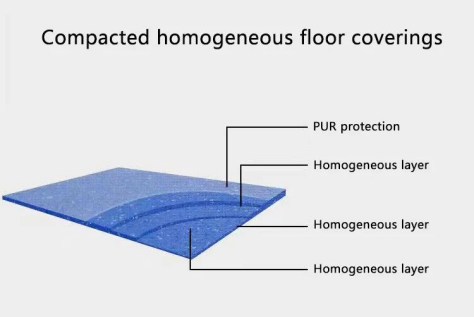
Homogeneous Vinyl Structure & UV-Cured PUR Layer Breakdown
3. Adding Integrated Inorganic Antimicrobial Additives (Optional/Engineered Grades)
For critical healthcare environments (such as ICUs, operating rooms, and isolation wards), manufacturers incorporate inorganic antimicrobial agents—such as silver ions (Ag⁺) or zinc-based biocides—directly into the full thickness of the homogeneous compound during manufacturing. These additives actively disrupt bacterial cell membranes and inhibit fungal spore germination for the entire lifespan of the product.
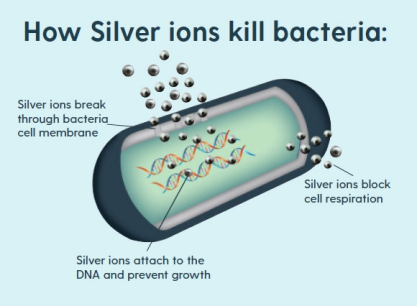
Mechanism of Action: Integrated Silver Ion Antimicrobial Technology
International Anti-Bacterial & Anti-Fungal Standards for Flooring
When specifying homogeneous sheet flooring for healthcare projects, verify that the technical datasheet lists compliance with these recognized testing standards:
- ISO 22196 / JIS Z 2801: Measurement of antibacterial activity on plastics and other non-porous surfaces (evaluates efficacy against Staphylococcus aureus and Escherichia coli).
- ASTM G21: Standard practice for determining resistance of synthetic polymeric materials to fungi.
- ASTM E2180: Standard test method for determining the activity of incorporated antimicrobial agent(s) in polymeric materials.
Conclusion
While PVC is not inherently a bioactive antimicrobial agent, properly homogeneous sheet vinyl—featuring seamless heat welding, protective PUR coatings, and optional silver-ion additives—delivers superior anti-bacterial and anti-fungal performance. It remains one of the safest and most hygienic flooring solutions for hospitals, cleanrooms, and laboratories globally.
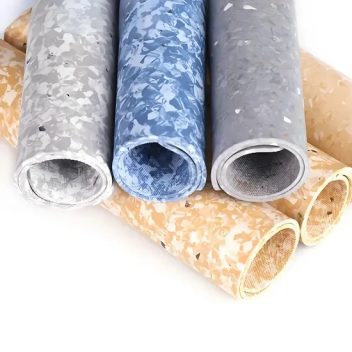
High-Hygienic Homogeneous Sheet Vinyl Flooring Solution