
A Practical Guide for Vinyl Flooring Importers and Distributors
Proper transportation and storage of vinyl sheet flooring are essential to preventing roll deformation, installation problems, and unnecessary customer complaints.
A standard 2m×20m×2mm homogeneous vinyl flooring roll can weigh over 120 kg. Without proper handling, prolonged pressure may affect its shape and flatness before installation.
At Y.H.F, we recommend the following tips for distributors, importers, and warehouse operators.
1. Should Vinyl Flooring Rolls Be Transported Vertically or Horizontally?
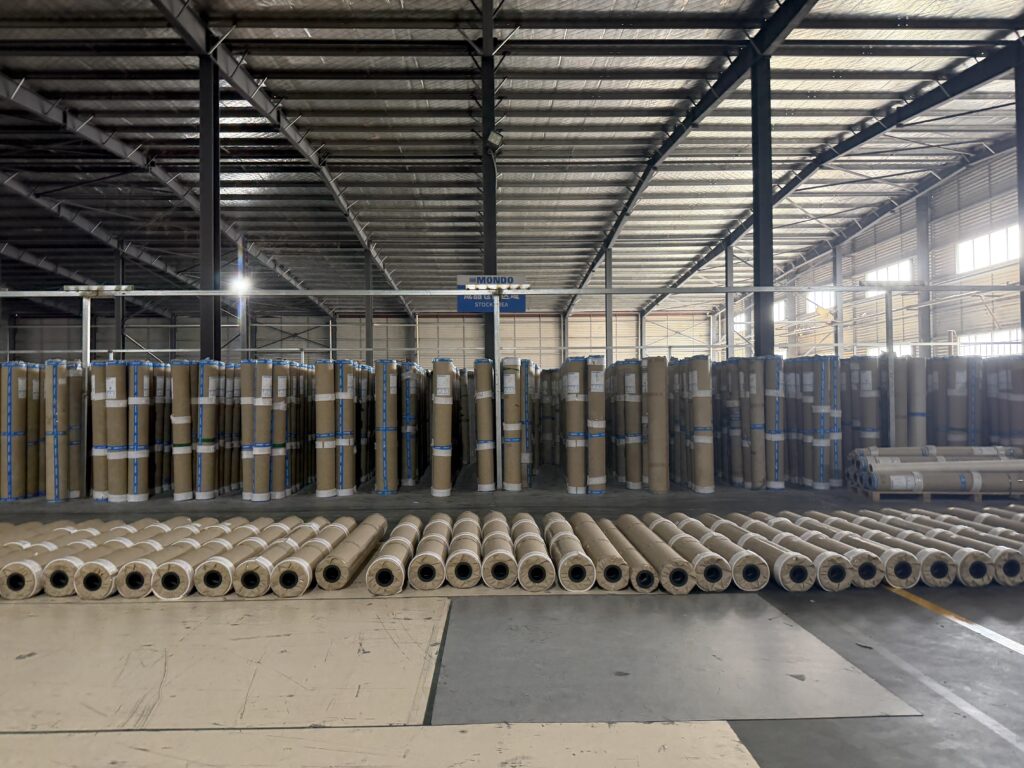
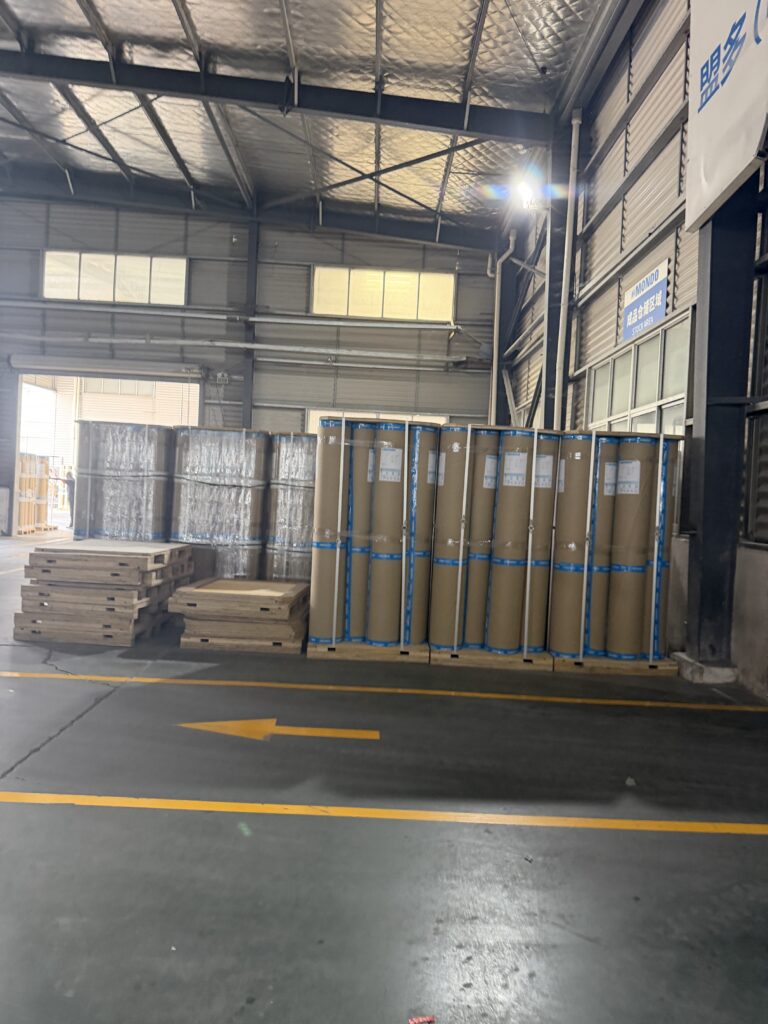
For standard 2-meter-wide homogeneous vinyl flooring rolls designed for upright storage, vertical transportation is generally recommended.
At Y.H.F, we normally palletize suitable vinyl sheet flooring rolls vertically for export shipments.
For inland transportation, we recommend:
- Keeping rolls upright on strong, stable pallets.
- Using a suitable flatbed truck or pallet-handling vehicle.
- Securing pallets with properly rated cargo straps to prevent movement.
- Protecting rolls from rain, direct sunlight, and extreme temperatures.
What if horizontal transportation is unavoidable?
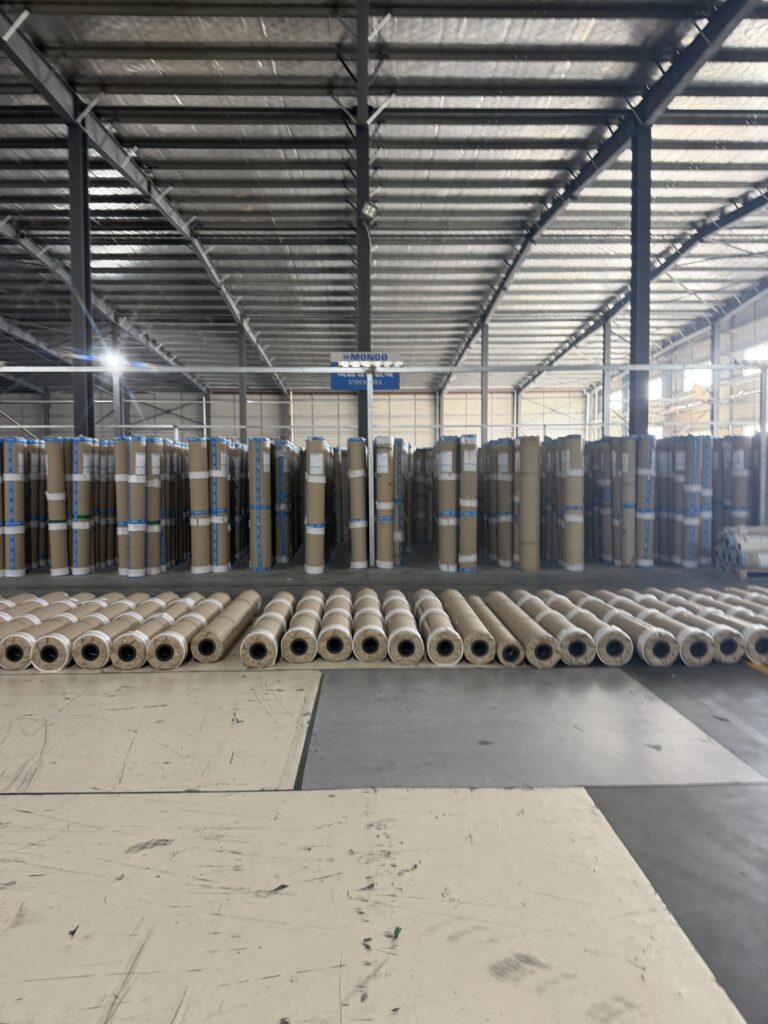
Horizontal transportation can be acceptable. Just distributors should transfer them to a vertical position as soon as possible after arrival.
2. Why Can Horizontal Storage Cause Vinyl Flooring Rolls to Deform?
One vinyl flooring roll can weigh more than 120 kg. When stored horizontally for an extended period, its own weight creates continuous pressure against the supporting surface.
If multiple rolls are stacked directly on top of one another, the lower rolls experience additional pressure.
Over time, this may cause:
- Flattened or oval-shaped rolls.
- Pressure marks or permanent deformation.
- Difficulty unrolling and flattening the flooring.
- Visible waves or unevenness during installation.
Can adhesive fix these problems?
Not necessarily. Although temporary curl may relax during proper conditioning, severe pressure-related deformation may not fully recover. Adhesive should never be relied upon to correct permanently distorted flooring.
Prevention is more reliable than attempting repairs during installation.
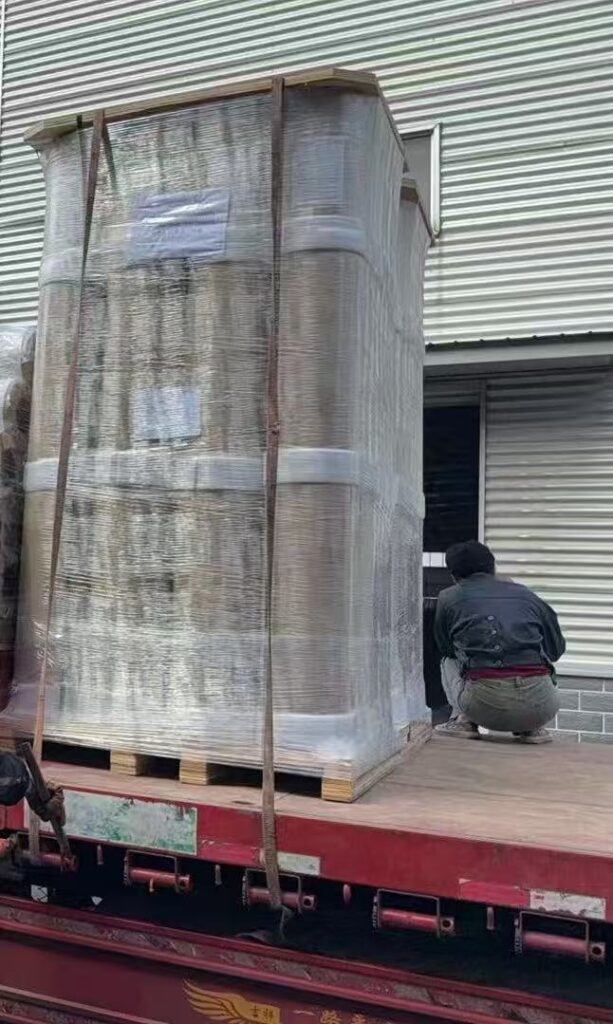
3. Should Pallet Straps Be Removed After Delivery?
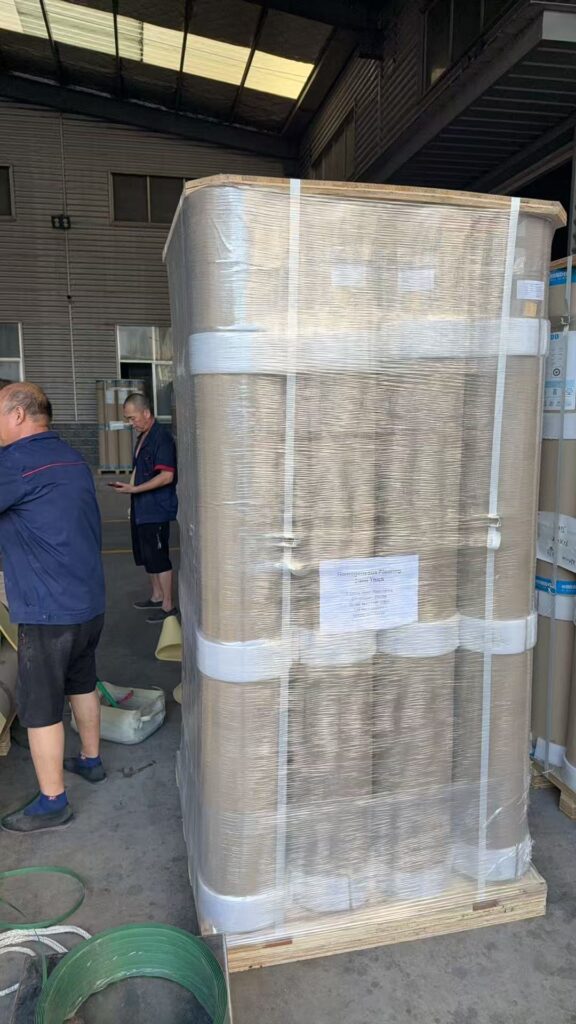
Yes, once the upright rolls are safely supported and secured for warehouse storage.**
Plastic strapping is essential for keeping palletized rolls stable during international shipping. After receiving a shipment, we recommend:
- Inspecting the pallets and rolls for visible damage.
- Positioning them on a clean, level warehouse floor.
- Securing the rolls against tipping before cutting the straps.
- Carefully removing external plastic pallet strapping.
- Keeping the rolls upright until distribution or installation.
Safety reminder: Never remove pallet straps from unsecured upright rolls. Heavy rolls can fall and cause injuries.
4. What Are the Best Warehouse Storage Practices?
Orientation: Store rolls upright; avoid prolonged horizontal storage.
Stacking: Do not stack rolls directly on top of one another
Environment: Keep rolls indoors, away from moisture, sunlight, and heat sources.
Floor conditions: Use a clean, dry, flat, and stable surface.
Handling: Use suitable equipment for moving heavy rolls. Like Folklift
For vinyl flooring distributors, product quality does not end at the factory gate.
Correct transportation, timely removal of shipping restraints, and appropriate warehouse storage help reduce roll deformation, installation difficulties, and avoidable after-sales complaints.