
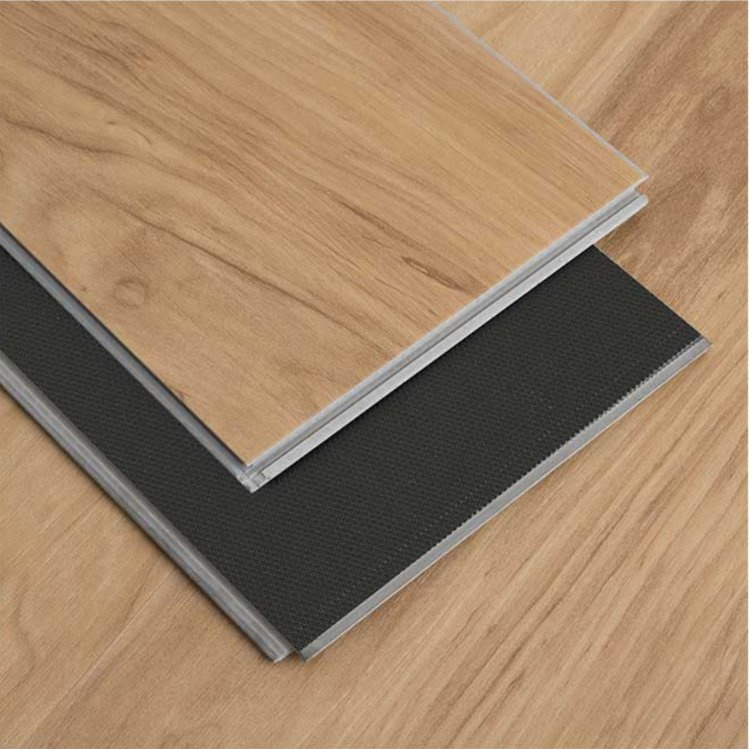
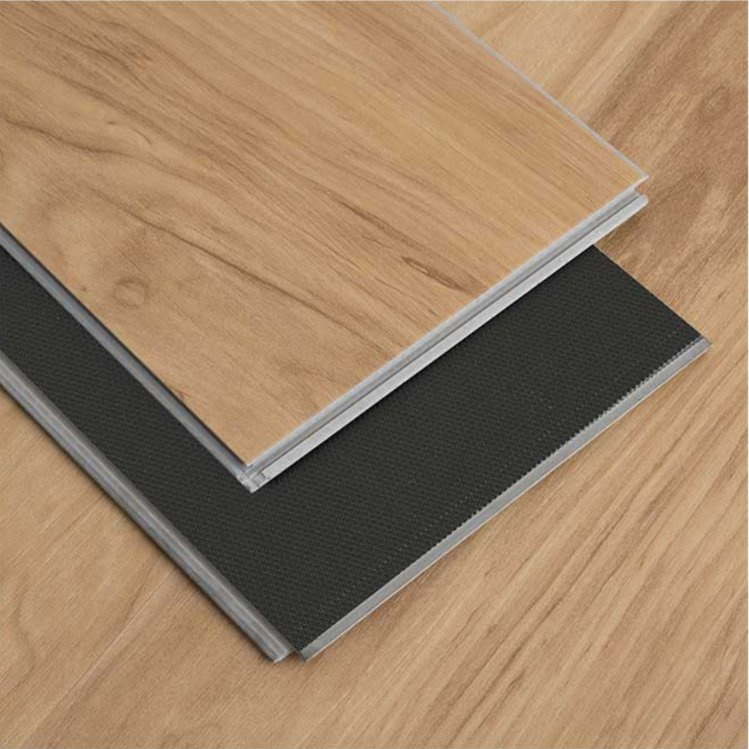
Whether you need underlayment depends on the flooring product and the installation environment. Many SPC floors already include an attached IXPE pad, while others require a separate underlayment for moisture protection or acoustic performance.
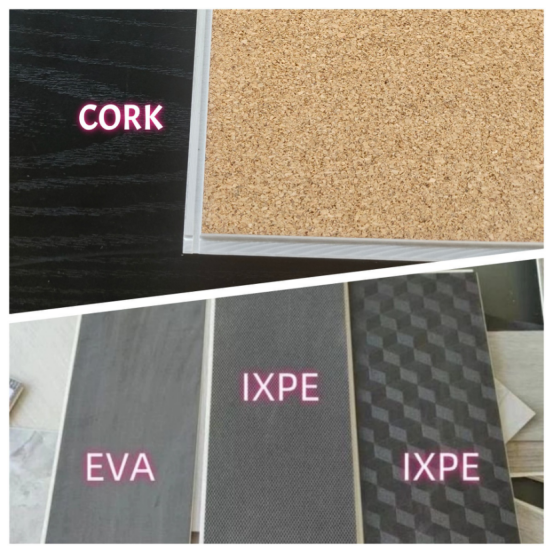
3 types of underlayment
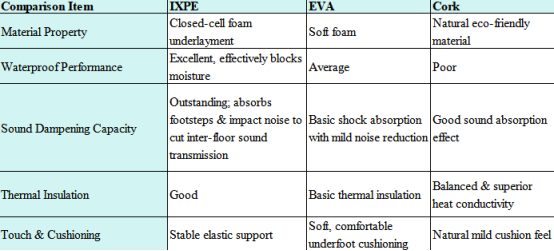
1 IXPE As a closed-cell foam underlayment, IXPE has good waterproof performance and solid sound dampening capacity. It helps block moisture and absorbs footsteps and impact noise to reduce sound transmission between floors.
2 EVA EVA foam features soft texture and decent shock resistance. It delivers comfortable underfoot cushioning and basic thermal insulation at a cost-effective price, making it a widely applicable choice.
3 Cork Made of natural eco-friendly material, cork provides decent thermal insulation and sound absorption. It has low chemical odour and balanced heat conductivity, suitable for spaces with environmental requirements.
When & Why to Use Underlayment for Your SPC Floors
In most situations, a standard-quality underlayment can help SPC floors perform better. IXPE is a popular choice among customers. Subfloor type: Porous subfloors can benefit from moisture barriers like underlayment, as they easily absorb water and may breed mold and mildew. For example, concrete subfloors can pair well with underlayment due to higher water absorption compared with other materials.
Subfloor condition: If your subfloor is cracked, uneven or in poor condition, underlayment can ease the influence of these defects and form a smoother base for SPC flooring.
Climate: Underlayment works well in humid, moist climates, as it can form a moisture barrier to protect flooring. Underlayment is still a worthwhile option for people who care about noise reduction or thermal efficiency, even in milder climates.
Attached pads: Floors with preattached pads usually do not require an extra underlayment, though an additional layer may bring benefits for homes with heavily damaged or porous subfloors. Installation method: Floating floor installations with interlocking click planks or tiles often use underlayment to offer extra support for connecting parts.
Sound Absorption. Underlay helps reduce noise transmission and soften walking sounds. It absorbs impact and footstep noise to create a quieter indoor environment.
Moisture Barrier. Certain underlay products have moisture-resistant properties, slowing moisture from contacting SPC flooring and lowering risks of humidity-related damage. Subfloor Imperfection. Underlay can cover minor uneven spots on subfloors, creating a flatter surface for SPC installation. This helps the finished floor look uniform and reduces uneven feelings when walking. Insulation. Some underlay materials have thermal insulation effects, improving foot comfort especially in cold weather. Cushioning. Underlay adds mild cushioning to flooring, making it more comfortable to stand on for long periods, such as in kitchens.
Installation Assistance. Underlay provides a stable base for SPC planks during installation and offers moderate friction to hold planks in place. Protection. Underlay serves as a buffer between subfloor and SPC flooring, lessening risks of damage caused by friction or light impacts. Longevity. Suitable underlayment can help extend SPC flooring service life by reducing daily wear and tear. When choosing an SPC flooring underlay, it’s important to consider installation conditions, including subfloor type, humidity level and expected walking comfort. Different underlayment materials deliver different levels of sound reduction, moisture resistance and cushioning; your selection can be based on your project priorities and space requirements.
Real Customer Case: Argentina Client Picks IXPE Underlayment for SPC Flooring
Our long-term partner from Buenos Aires, Argentina, operates a local flooring wholesale business supplying residential and small commercial renovation projects across the Pampas region. Most local buildings have concrete subfloors, and Buenos Aires has a humid subtropical climate with frequent rainfall and high annual humidity. Noise from footsteps easily transfers between floors in multi-story apartments, which often draws feedback from residents.
The client planned a bulk order of 20,000 m² click-lock SPC flooring for 120 new mid-rise apartment units. At first, he compared three mainstream underlayment options: IXPE, EVA foam and cork, and requested full performance samples for local testing. Moisture risks of concrete slabs Concrete subfloors in central Argentina may release underground water vapor. Local installers previously encountered mold growth, joint separation and slight floor warping after using EVA underlayment, as EVA has a lower closed-cell ratio and weaker vapor blocking performance.
Cork can fit dry rooms but struggles to maintain stable performance through long humid rainy seasons in Buenos Aires. Local residential sound insulation standards Argentina’s residential building codes set sound insulation requirements for impact noise between floors. Residents often mention noise from walking and moving furniture upstairs. The client tested sound absorption performance of all three materials;
IXPE showed better IIC sound ratings to meet local housing standards. Year-round temperature change and service life expectations Argentina has hot, humid summers and cool winters.
EVA foam may turn softer and lose partial cushioning elasticity under long-term high temperature, while natural cork has limited compression resistance under frequent foot traffic. IXPE cross-linked closed-cell foam keeps a relatively stable structure amid temperature shifts and lessens risks of collapse or deformation. Installation efficiency for floating SPC floors All apartments adopt click-lock floating installation. IXPE provides even soft support to stabilize SPC locking joints, lowering chances of installation gaps and creaking sounds after laying.
After one month of on-site sample testing and comparison, the Argentine client chose IXPE as the main matching underlayment for this apartment project, and did not select EVA and cork for this batch. Moisture resistance performance: Ground-floor units with direct concrete slabs show few signs of mold, damp stains or floor deformation after long-term use. IXPE’s high-density closed-cell structure helps slow underground moisture seepage. Reduced cross-floor noise feedback: Property managers received far fewer noise complaints from residents, thanks to IXPE’s good impact sound dampening effect. Stable foot feel and lasting cushioning: Kitchens, living rooms and areas with long standing time maintain steady soft foot feel without obvious foam flattening. Lower maintenance frequency:
Compared with earlier projects using EVA, service requests for loose locks and uneven floors dropped significantly. The Argentine buyer later placed repeated monthly orders of IXPE underlayment and shared his market observation: Many local homeowners and contractors tend to choose IXPE, as it helps address two common flooring issues in Argentina — high humidity and inter-floor noise. For concrete subfloors and multi-story residential projects, IXPE delivers balanced performance that EVA and cork struggle to match, bringing higher customer satisfaction and fewer after-sales troubles for wholesale businesses.
When Not to Use Underlayment
Extra underlayment is unnecessary in three common cases. It is not needed for flooring with an attached pad. Do not add underlayment if the manufacturer clearly states this in installation guidelines. Additionally, extra underlayment is not required for double cushion flooring systems.