
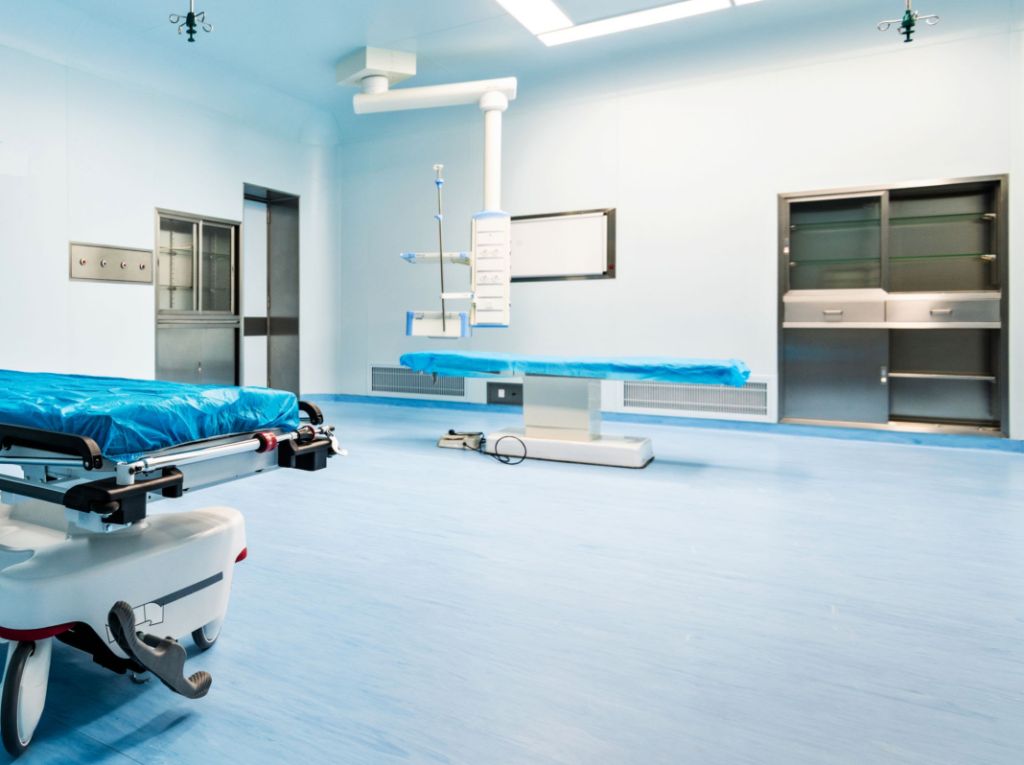
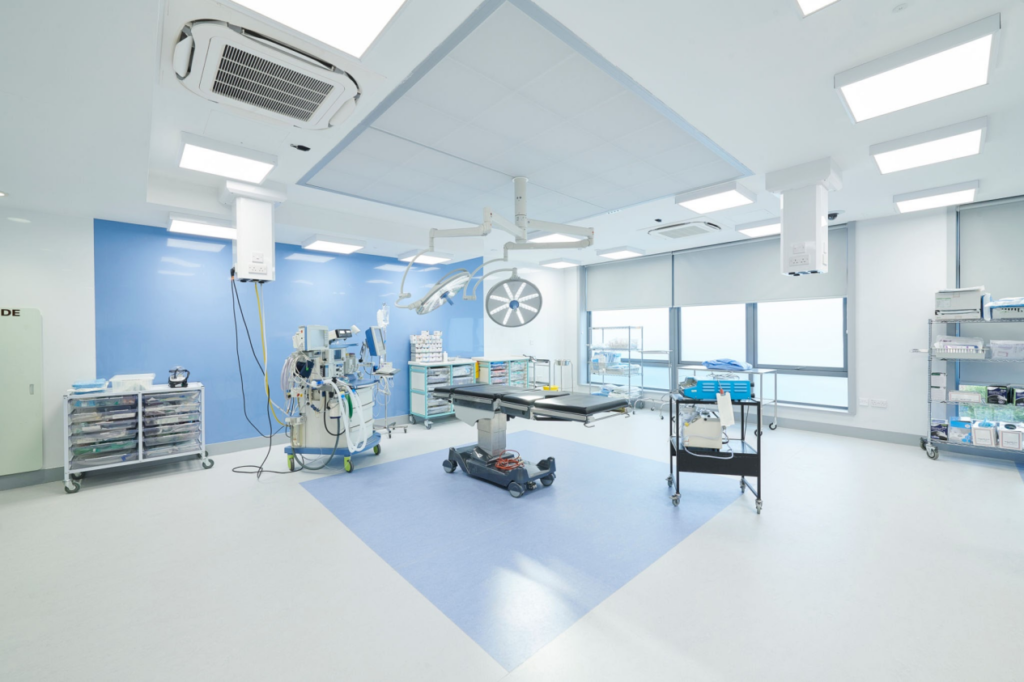
Seamless homogeneous vinyl sheet in a hospital operating theater.
Yes, homogeneous vinyl sheet flooring is highly recommended—and remains widely used—for Intensive Care Units (ICUs) and Operating Theaters (OTs).
Healthcare environments with strict infection control and cleanroom requirements depend on homogeneous sheet vinyl because of its seamless installation, uniform material structure, superior chemical resistance, and static-control (ESD) options.
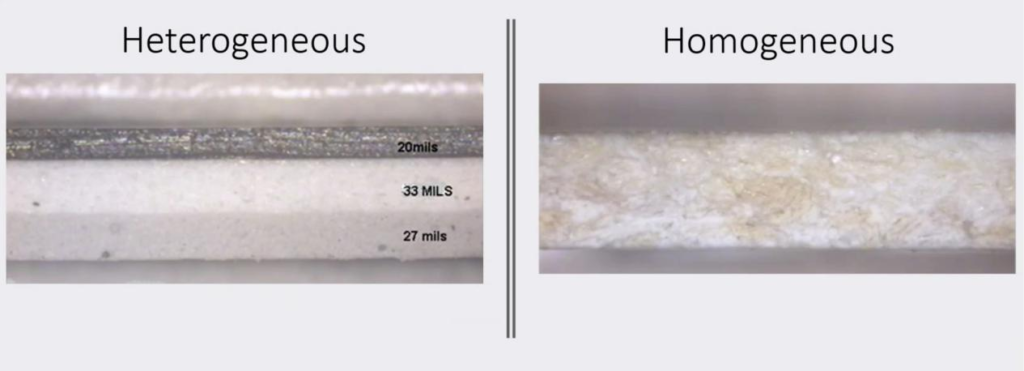
Structure of Heterogeneous sheets VS Structure of Homogeneous sheets
Why Homogeneous Sheet Flooring Is Preferred for Critical Care Areas
Unlike heterogeneous vinyl (which consists of multiple laminated layers), homogeneous sheet vinyl is composed of a single, uniform layer from top to bottom. This single-layer construction gives it unique performance advantages in high-stakes medical settings:
1. Infection Control & Seamless Hygiene
In ICUs and operating rooms, gaps or seams can harbour bacteria, pathogens, and fluids. Homogeneous vinyl sheets are heat-welded at all joints and coved up the wall (flash coving), creating a monolithic, non-porous barrier that prevents moisture infiltration and bacterial growth.
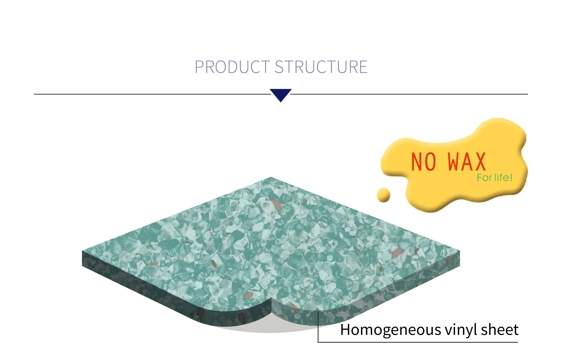
Structure of homogeneous sheets
2. High Stain and Chemical Resistance
Operating rooms and ICUs frequently encounter harsh disinfectants, iodine, blood, and medical reagents. High-grade homogeneous sheet flooring treated with a UV-cured PUR (Polyurethane) surface treatment withstands aggressive cleaning protocols without degrading or yellowing.
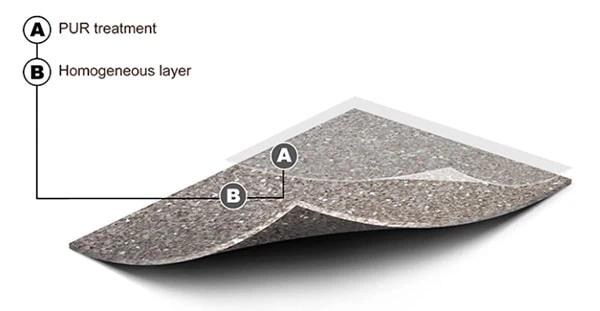
Anatomy of Homogeneous Sheet Vinyl (PUR Surface Coating + Single Layer)
3. High Restorability & Superior Durability
Because the material, color, and pattern extend through the full thickness of the floor, high traffic from heavy medical equipment, surgical tables, and rolling beds will not wear away the surface pattern. Minor scratches or stains can be buffed and restored without replacing the floor.
Conductive homogeneous sheet flooring integrated with a grounding system in an operating room.
Homogeneous vs. Heterogeneous vs. Rubber Flooring for ICUs & OTs
| Performance Metric | Homogeneous Sheet Vinyl | Heterogeneous Sheet Vinyl | Rubber Flooring |
| Material Structure | Uniform single layer throughout | Multi-layer with printed film | Synthetic or natural rubber |
| Infection Control | Excellent (Heat-welded seamless) | Good (Heat-welded) | Good (Heat-welded) |
| Durability & Wear | Extreme (Restorable surface) | Moderate (Wear layer limits life) | High |
| Stain Resistance | High (PUR-coated) | Moderate to High | Fair (Prone to staining) |
| Cleanroom Rating | ISO Class 4–5 compatible | ISO Class 6–7 | ISO Class 5–6 |
| ESD / Static Control | Specialized grades available (requires carbon-infused formulation & copper grid grounding) | Limited | Available (Specialized grades) |
Key Technical Requirements for Hospital Specification
When choosing homogeneous sheet flooring for critical areas, ensure the product meets the following international standards:
- Abrasion Resistance: Group T or Group P (EN 660-2) for maximum wear resistance.
- Infection Control: Antimicrobial and anti-fungal treatment compliant with ISO 22196.
- Indoor Air Quality: Low-VOC emissions (Eurofins Indoor Air Comfort Gold or FloorScore certified).
- Slip Resistance: R9 or R10 classification (DIN 51130) to prevent staff slip injuries during liquid spills.
- Cleanroom Compliance: Tested according to ISO 14644-1 cleanroom particle emission standards.
Conclusion
For ICUs and operating theaters in hospitals where infection control, chemical durability, and seamless hygiene are non-negotiable, homogeneous sheet flooring is the gold standard solution. Its monolithic structure combined with heat-welded seams ensures long-term compliance with global healthcare hygiene standards.