
——Homogeneous vs Heterogeneous
Core Comparison
Choosing the right vinyl flooring is essential for creating a durable, attractive, and cost-effective space. Among commercial flooring solutions, homogeneous vinyl flooring and heterogeneous vinyl flooring are two of the most popular options. Although both are PVC-based resilient floors, their construction, performance, appearance, and ideal applications differ significantly.
In this guide, we’ll compare homogeneous vinyl flooring vs heterogeneous vinyl in terms of structure, durability, maintenance, design flexibility, and cost to help you determine which flooring best suits your project.
What Is Homogeneous Vinyl Flooring?
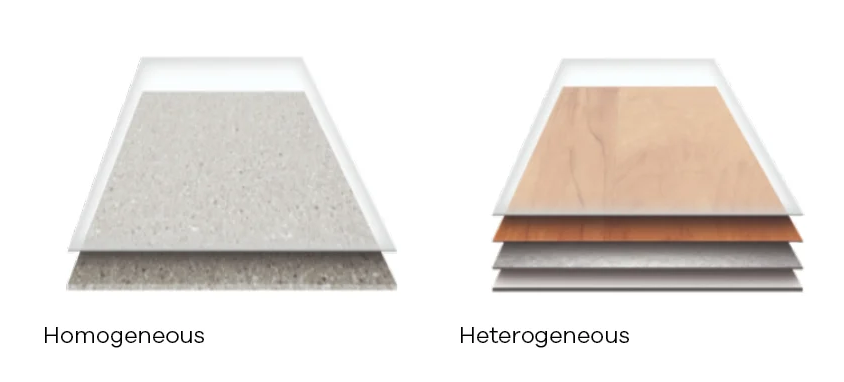
Homogeneous vinyl flooring is manufactured from a single layer of vinyl material, meaning the color and pattern extend throughout the entire thickness of the floor.
Because there is no separate printed decorative layer, scratches and surface wear are less noticeable over time. This makes homogeneous flooring highly suitable for environments with continuous foot traffic and strict hygiene requirements.
Key Characteristics
- Uniform construction throughout the entire thickness
- Excellent wear resistance
- Long-lasting color consistency
- Easy maintenance and restoration
- Suitable for heavy commercial and institutional use
- Antibacterial & Stain Resistant
Typical applications include:
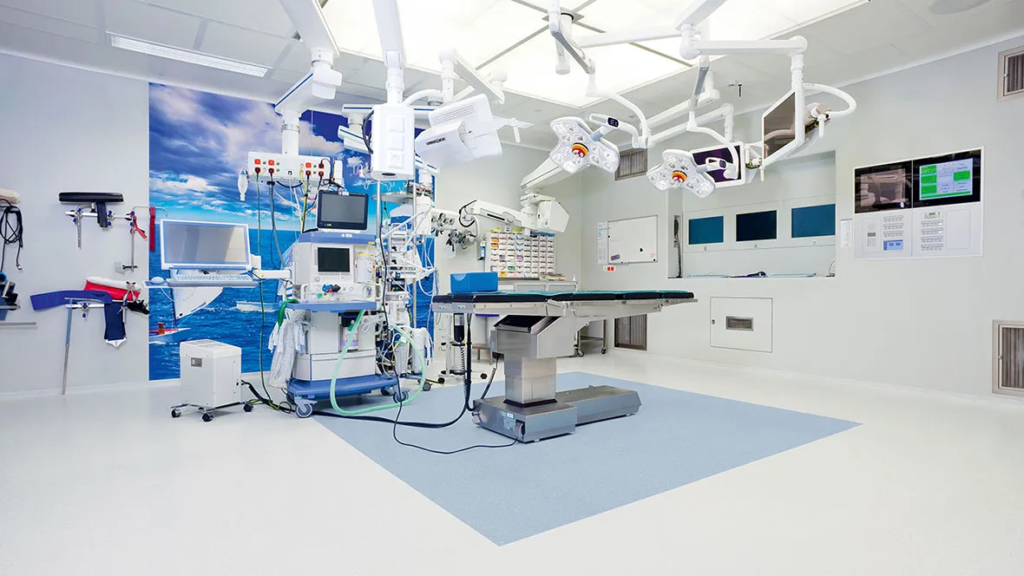
- Hospitals
- Laboratories
- Pharmaceutical facilities
- Schools
- Airports
- Industrial cleanrooms
What Is Heterogeneous Vinyl Flooring?
Heterogeneous vinyl flooring consists of multiple functional layers, each designed for a specific purpose. A typical structure includes:
- UV coating
- Wear layer
- Printed decorative film
- Fiberglass stabilization layer
- PVC Core
This layered construction allows manufacturers to create highly realistic wood, stone, marble, or abstract patterns while maintaining durability.
Key Characteristics
- Multi-layer construction
- Wide variety of colors and designs
- Comfortable underfoot
- Good dimensional stability
- Suitable for commercial and residential environments
Common applications include:
- Offices
- Hotels
- Retail stores
- Shopping malls
- Restaurants
- Residential buildings
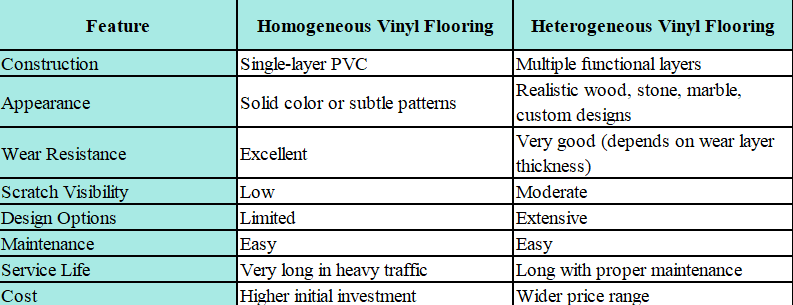
Homogeneous Vinyl Flooring vs. Heterogeneous Vinyl: Key Differences
Durability Comparison
When comparing durability, homogeneous vinyl flooring generally performs better in demanding commercial environments.
Since the material is consistent throughout the entire floor thickness, surface scratches do not expose a different layer underneath. Even after years of use, the flooring can often be restored through cleaning and polishing.
Heterogeneous vinyl flooring, however, relies on its wear layer for protection. Once this layer is worn through, the decorative film beneath may become damaged, making replacement necessary.
For facilities operating 24/7 or experiencing constant foot traffic, homogeneous flooring is often the more durable choice.
Design and Aesthetic Comparison
This is where heterogeneous vinyl flooring excels.
Its printed decorative layer can accurately reproduce:
- Wooden floor design
- Natural stone
- Marble
- Concrete
- Terrazzo
- Custom graphic designs
This makes heterogeneous vinyl the preferred option for designers seeking both functionality and visual appeal.
Homogeneous flooring typically focuses more on performance than decorative variety, although modern manufacturers now offer attractive chip patterns and contemporary color collections.
Maintenance Requirements
Both flooring types are relatively easy to maintain compared with many traditional flooring materials.
Daily maintenance generally includes:
- Sweeping
- Vacuuming
- Damp mopping
- Neutral floor cleaner
Homogeneous flooring has an advantage because minor scratches can often be buffed or polished without affecting the appearance.
Heterogeneous flooring requires greater care to avoid wearing through the protective wear layer.
Cost Comparison
The total cost depends on several factors, including material quality, wear layer thickness, installation, and expected service life.
Generally:
- Homogeneous vinyl flooring has a higher upfront cost but offers excellent long-term value in demanding environments.
- Heterogeneous vinyl flooring is available across a broader price range, making it suitable for projects with varying budgets.
When evaluating flooring costs, consider the entire lifecycle rather than just the initial purchase price.
Which Flooring Is Better?
There is no universal answer—the best choice depends on your project requirements.
Choose Homogeneous Vinyl Flooring If You Need:
- Maximum durability
- Heavy foot traffic resistance
- Long service life
- Low lifecycle cost
- Hygienic environments
- Easy restoration
Choose Heterogeneous Vinyl Flooring If You Need:
- Rich decorative designs
- Wood or stone appearance
- Comfortable flooring
- Commercial interior aesthetics
- Greater design flexibility
- Balanced performance and budget
FAQ
Is homogeneous vinyl flooring more durable?
Yes. Because the material is consistent throughout its thickness, homogeneous vinyl flooring generally offers superior wear resistance and a longer service life in high-traffic commercial environments.
Is heterogeneous vinyl flooring waterproof?
Yes. Most heterogeneous vinyl flooring is waterproof, making it suitable for kitchens, healthcare facilities, offices, and commercial interiors.
Which flooring is better for hospitals?
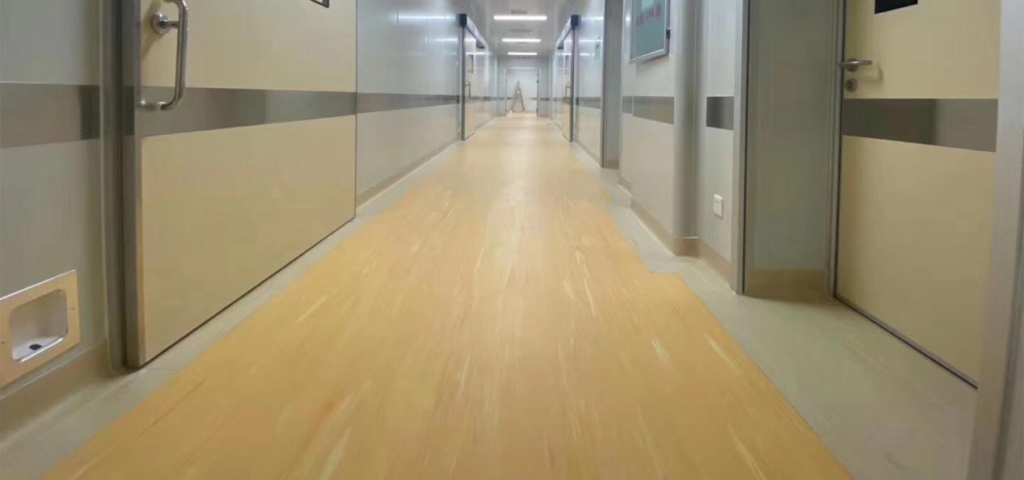
Homogeneous vinyl flooring is commonly recommended for hospitals due to its durability, hygienic properties, easy maintenance, and excellent resistance to heavy foot traffic.
Can heterogeneous vinyl flooring imitate wood?
Absolutely. One of its biggest advantages is the ability to replicate natural wood, stone, marble, concrete, and many other decorative finishes with remarkable realism.
Conclusion
Understanding the differences between homogeneous vinyl flooring vs. heterogeneous vinyl helps architects, contractors, facility managers, and distributors make informed flooring decisions.
If your priority is maximum durability, hygiene, and long-term performance, homogeneous vinyl flooring is the ideal solution. If design versatility and aesthetic appeal are more important, heterogeneous vinyl flooring provides countless decorative possibilities while still delivering reliable commercial performance.
By evaluating traffic levels, maintenance expectations, design goals, and lifecycle costs, you can confidently select the vinyl flooring solution that best fits your project.