
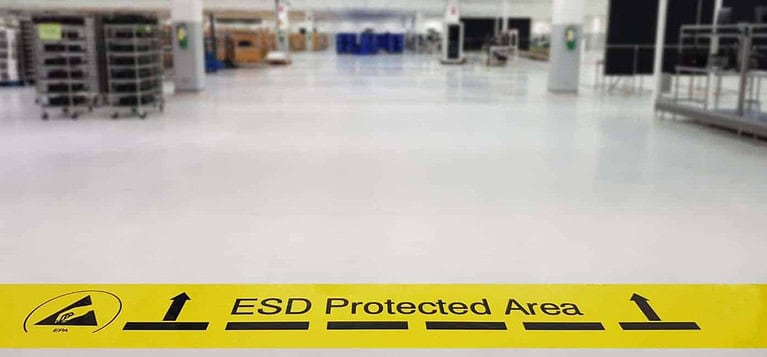
ESD flooring should be cleaned regularly with a neutral PH cleaner and suitable cleaning tools. Proper maintenance keeps the surface clean, maintains stable electrical resistance, and helps the ESD flooring system perform reliably over long-term use.
Unlike conventional resilient flooring, ESD flooring is designed to provide a controlled path for electrostatic charges. Incorrect cleaning chemicals, insulating waxes, or improper maintenance may alter the floor’s surface resistance and reduce the effectiveness of the entire ESD control system. Proper cleaning therefore protects not only the appearance of the floor but also its electrical performance.
1. Core Principles: Strict Selection of Cleaning Chemicals and Waxing Standards
The most common cause of ESD antistatic flooring failure is often not physical wear and tear, but rather the use of incorrect cleaning and maintenance chemicals. Common commercial cleaners and floor waxes are specifically designed for traditional commercial floors. Applying ordinary floor wax or polymer coatings to the surface of ESD flooring will form a non-conductive insulating film, isolating the internal conductive pathways of the flooring and completely disabling the static grounding path.
Cleaning and maintenance should always follow both the flooring manufacturer’s recommendations and applicable standards, such as ANSI/ESD S20.20, IEC 61340-5-1, and the maintenance instructions provided for ESD flooring systems.
The following are the guidelines for cleaning and maintaining ESD flooring:
(1) Never use ordinary insulating floor wax or ordinary emulsion coatings in antistatic areas, as this will severely reduce or damage the floor’s conductivity and static dissipation properties.
(2) If polishing, enhancing gloss, or adding a scratch-resistant protective layer is required for certain applications, a dedicated ESD conductive wax must be used. (These specialized products contain high-tech conductive polymer technology, which seamlessly integrates with the floor’s conductive pathways while enhancing gloss, ensuring that surface resistance is precisely maintained within the acceptable standard range.)
(3) A neutral detergent (pH 6.5–8.5) must be used. A neutral formula effectively breaks down grease and surface dirt without damaging the floor substrate. Strong acids, strong alkalis, or solvent-based cleaners are strictly prohibited: Strong acids, strong alkalis, strong degreasers, or solvents (such as phenolic disinfectants) are highly corrosive and will erode the floor surface substrate, even damaging its physical and conductive properties.
| Don’t | Root Cause of Damage |
| Apply ordinary floor wax | Creates an insulating film to block static conductive paths |
| Use solvent-based cleaners | Corrodes PVC materials and destroys internal conductive additives |
| Clean with strong acids or alkalis | Erode floor surface and damage physical & conductive properties |
| Use hard abrasive scrub pads | Accelerate surface scratches and wear |
| Flood the floor with excessive water | Damage floor adhesive and separate floor seams |
2. Tiered Maintenance System: Daily and Periodic Maintenance Procedures
Establishing a structured cleaning plan not only prevents abrasive particles from scratching the surface but also ensures that the surface resistance in high-traffic areas remains at a low, acceptable level.
(1) Post-Construction and Initial Maintenance
- New Installation Protection: Do not wet clean for at least 3 days after installation. During construction, properly cover and protect with stain-resistant and moisture-proof protective paper.
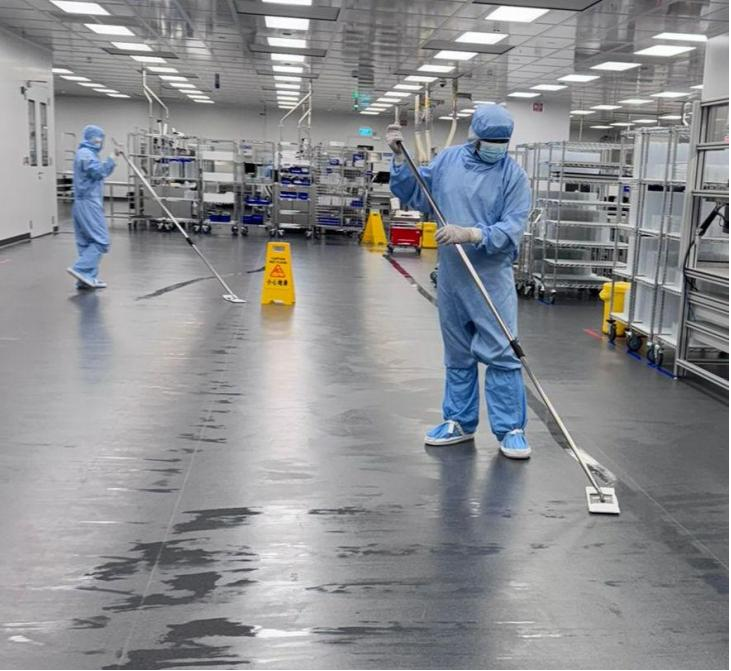
- Initial Cleaning: First, use a vacuum cleaner or dust mop to remove construction residue, debris, and grit. Then, use a neutral cleaning solution with a rotary floor scrubber with a scrubbing pad (recommended speed 150–180 rpm, using a 3M red cleaning pad) to scrub, and immediately vacuum up the wastewater and rinse with clean water. Do not allow water to accumulate on the floor or soak the floor in water.
(2) Daily Care
- Dry Dusting: Use a vacuum cleaner or dry synthetic/microfiber lint-free mop daily to remove dust and grit to prevent abrasive particles from scratching the floor. A high-quality dust-control and anti-slip mat should be placed at the entrance to block up to 80%–95% of the dirt brought in.
- Wet mopping: Use a clean mop with diluted neutral detergent or warm water to scrub stains. Control the amount of water used and dry the mop promptly afterward.
(3) Regular maintenance and polishing/repair of the machine
- Spray cleaning and dry polishing: For high-traffic areas, a low-speed floor scrubber (150–180 rpm, with a red cleaning pad) with neutral detergent can be used for spray cleaning; or a high-speed polisher (300–1500 rpm, with a white or beige polishing pad) can be used for dry polishing/spray polishing to remove minor scratches and enhance surface shine.
- Scratch repair: For deeper scratches, manual cleaning with a mild detergent or spot polishing with a polisher and soapy water as a lubricant can be used for repair. Avoid excessive dry polishing to prevent damage to the tiles.
Standard ESD Flooring Maintenance Schedule
| Maintenance Task | Recommended Frequency |
| Dry dust removal | Daily |
| Damp mopping | Daily or as needed |
| Machine scrubbing | Weekly / Monthly |
| Polish restoration (if applicable) | As required |
| Electrical resistance verification | Periodically or after major maintenance |
3. Physical Protection and Precautions for Daily Use
Besides chemical cleaning, physical protection is also crucial for maintaining the long-term aesthetics and performance of ESD flooring.
Regarding protection against heavy pressure and scratches, mats or felt sheets must be laid down to protect the floor when moving heavy equipment. Protective pads should be installed on the legs of tables and chairs, and casters must be made of soft materials that meet resilient flooring standards (such as EN425). Walking on the floor in high heels is strictly prohibited to prevent dynamic point loads exceeding the floor’s tolerance limits, which could damage the floor.
Regarding protection against sunlight and high temperatures, prolonged exposure to direct sunlight exceeding 38°C (100°F) may cause ESD vinyl flooring to deform, dent, or fade. When sunlight is strong, curtains or blinds should be drawn to block it.
Regarding protection against rubber and asphalt stains, certain low-quality carpet backings containing emulsions, new asphalt surfaces, rubber mats, or paste-like waxes may cause permanent migration staining of vinyl flooring; direct contact should be avoided.
4. Conclusion
Regular cleaning and proper maintenance are essential for keeping ESD flooring functional, durable, and visually clean. By using suitable cleaning products and following recommended maintenance procedures, ESD flooring can maintain stable electrical performance and provide reliable protection in demanding environments.