

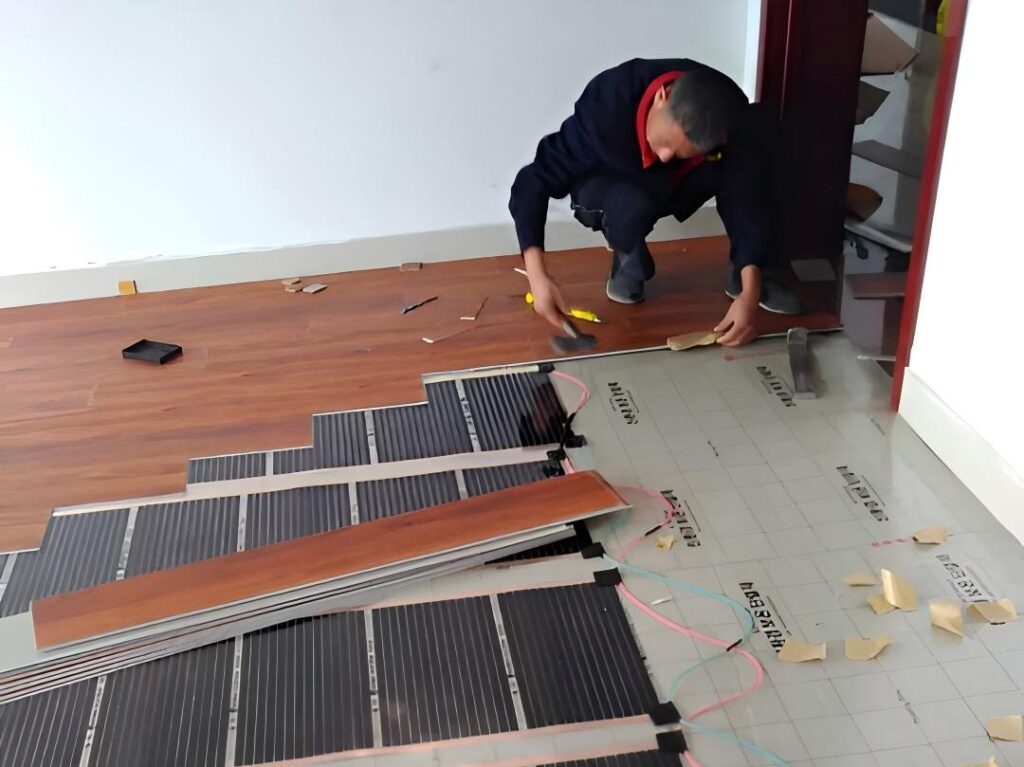
SPC flooring is compatible with both electric and hydronic underfloor heating systems. Its rigid stone composite core provides excellent dimensional stability under temperature changes, making it suitable for residential and commercial heated floor applications.
Key Performance Advantages in Heated Environments
Properly installed SPC flooring delivers stable dimensional performance under temperature fluctuations while maintaining strong click-lock joint integrity under thermal stress. It also enables efficient heat transfer from underfloor heating systems and provides reliable resistance to warping, swelling, and deformation, ensuring long-term durability in continuously heated environments. These combined properties make SPC a dependable flooring solution for modern energy-efficient building systems.
Technical Parameters and Specifications
When evaluating SPC flooring for underfloor heating applications, engineers and procurement teams should assess key indicators related to thermal transfer efficiency, dimensional stability, and heat resistance.
| Parameter | Typical Value | Test Standard |
| Total Thickness | 4.0 – 6.5 mm | ISO 24346 |
| Wear Layer | 0.3 – 0.7 mm | EN 429 |
| Thermal Resistance (R-value) | ≤ 0.15 m²K/W | EN 12667 |
| Dimensional Stability | ≤ 0.15% | ISO 23999 |
| Residual Indentation | ≤ 0.10 mm | ISO 24343 |
| Maximum Surface Temperature | 27–29°C recommended | Installation Guideline |
Low thermal resistance is essential for efficient heat transfer in underfloor heating systems. Excessively thick underlayment can significantly reduce heating efficiency, even if the SPC flooring itself meets technical requirements.
Recommended Heating Activation Process
Proper commissioning of underfloor heating systems is critical after SPC installation.
The standard procedure includes:
- Increasing temperature gradually by no more than 3–5°C per day
- Avoiding sudden activation after installation completion
- Maintaining stable heating conditions during initial operation
- Preventing frequent switching between high and low temperature states
This controlled heating cycle allows the flooring system to adapt gradually, reducing internal stress on both the core material and the locking mechanism.
In large-scale commercial projects, this step is often included in technical handover documentation to ensure flooring warranty compliance.
Subfloor Conditions and Installation Readiness
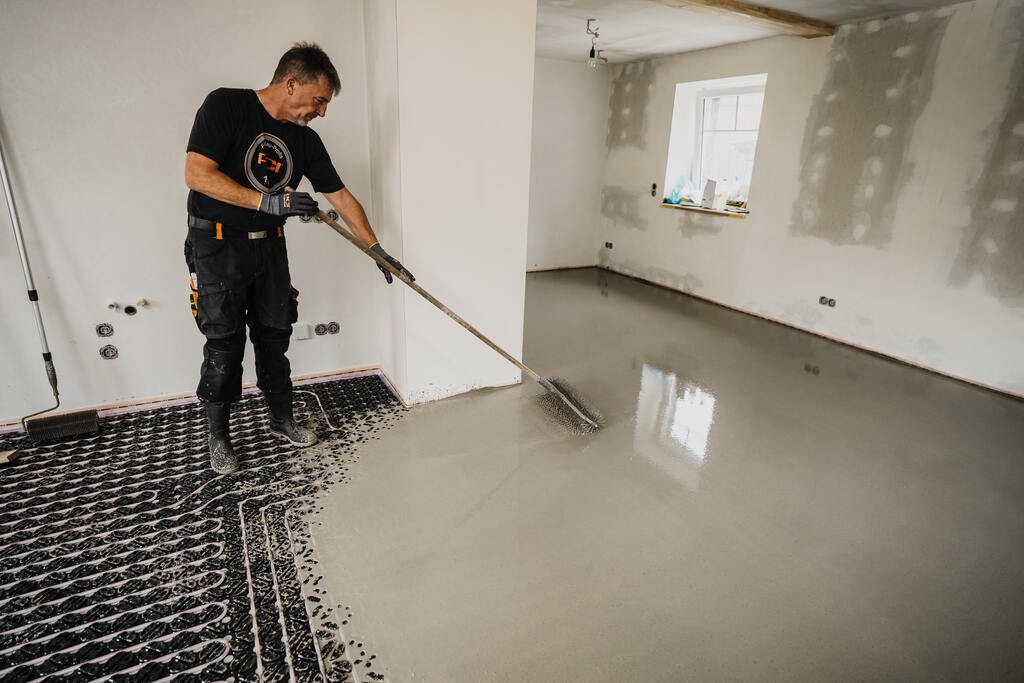
The performance of SPC flooring over heating systems is not only dependent on the flooring itself, but also on subfloor preparation.
Before installation, the following conditions must be met:
- The subfloor must be completely dry and fully cured
- Moisture content must comply with construction standards
- The surface must be level to avoid uneven heat distribution
- Cracks or structural instability must be repaired prior to installation
In cement-based radiant heating systems, sufficient curing time is essential to prevent trapped moisture. If installed too early, residual moisture may cause long-term performance issues such as bubbling or joint instability.
Proper subfloor preparation is therefore a critical engineering step in ensuring long-term flooring reliability.
Underlayment Selection: IXPE vs Cork in Heated Systems
Underlayment plays a key role in balancing thermal efficiency, acoustic performance, and comfort.
IXPE Underlayment (Preferred Solution)
Cross-linked polyethylene foam (IXPE) is the most commonly used underlayment for SPC flooring in heated environments.
Key advantages include:
- Low thermal resistance, allowing efficient heat transfer
- Moisture resistance suitable for concrete subfloors
- Stable performance under continuous thermal cycles
- Cost-effective for large-scale projects
A thickness range of 1.0–1.5mm is generally recommended for underfloor heating applications, as it provides optimal balance between heat efficiency and acoustic comfort.
Cork Underlayment (Alternative Option)
Cork is a natural underlayment material with strong acoustic and environmental properties.
Its advantages include:
- Excellent sound absorption performance
- Natural and sustainable material composition
- Comfortable foot feel
However, cork has a higher thermal resistance compared to IXPE. This means heat transfer efficiency is reduced, resulting in slower system response times in heated environments.
For this reason, cork is typically selected in projects where acoustic performance is prioritized over heating efficiency.
Optimal performance in heating systems relies on an SPC flooring system composed of a high-density rigid core for dimensional stability, a UV-coated wear layer for surface protection, a precision click-lock installation system, and a thin IXPE underlayment or alternative acoustic layer. This configuration delivers balanced performance in thermal efficiency, mechanical strength, and installation reliability. As modern construction standards continue to evolve, high-performance SPC flooring is increasingly specified for heated environments due to its consistent and predictable engineering behavior.
Residential Underfloor Heating Projects
A comparable example can be found in a residential renovation project in Oslo, Norway (completed in 2019). The project used a hydronic underfloor heating system combined with SPC click flooring. SPC flooring was installed as part of an interior renovation replacing traditional tile flooring.
The heating structure consisted of water pipes embedded in a 50 mm cement screed layer, with a 5–6 mm SPC click plank installed as the surface finish. The flooring was selected to replace ceramic tiles in order to improve walking comfort and provide a warmer underfoot feel.
After installation, the system demonstrated stable thermal performance. No visible joint separation, gapping, or deformation was observed during operation, confirming the dimensional stability of SPC flooring under continuous radiant heating conditions.
Across the case, key performance observations showed stable heat distribution during heating cycles, with no warping, swelling, or joint failure, while also delivering improved walking comfort compared to ceramic tile systems and maintaining reliable performance under hydronic underfloor heating conditions. These results confirm that SPC flooring performance depends not only on the plank itself, but also on the full system design, including underlayment selection and installation quality.

Conclusion
SPC flooring can be safely installed over underfloor heating systems when proper installation and temperature control guidelines are followed.
Thanks to its rigid core construction and low thermal expansion, SPC flooring maintains excellent dimensional stability under continuous radiant heat, making it a reliable choice for modern residential and commercial flooring projects.
For optimal performance, installation should follow three key principles: maintaining surface temperature below 27°C, applying gradual heating during system commissioning, and using a thin IXPE underlayment to support efficient heat transfer.
When these conditions are met, SPC flooring delivers a balanced combination of stability, comfort, and thermal efficiency, making it a widely adopted solution in global underfloor heating applications.