
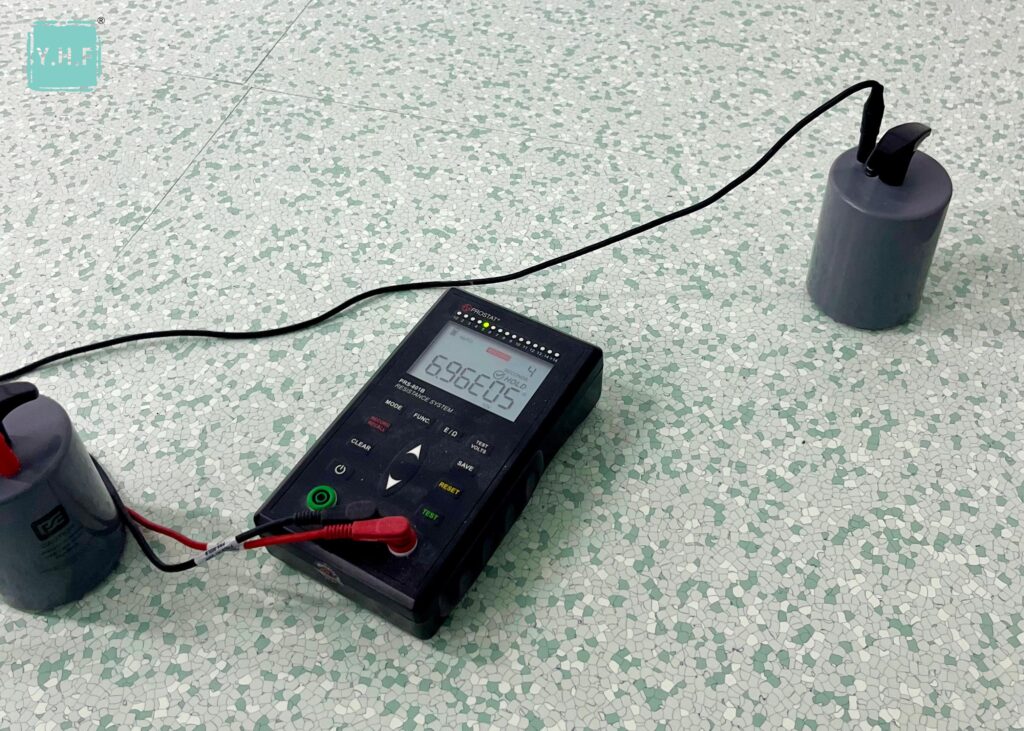
Introduction
Electrostatic discharge (ESD) can damage sensitive electronic components, disrupt production processes, and create safety risks in specialized environments. Choosing the correct ESD flooring system is essential for maintaining a controlled static environment.
Among the most common solutions are Conductive Flooring and Static Dissipative Flooring. Although both are designed to control static electricity, they serve different purposes and applications.
This guide explains the key differences, resistance ranges, applications, and selection criteria to help you choose the right ESD flooring solution.
What Is Conductive Flooring?
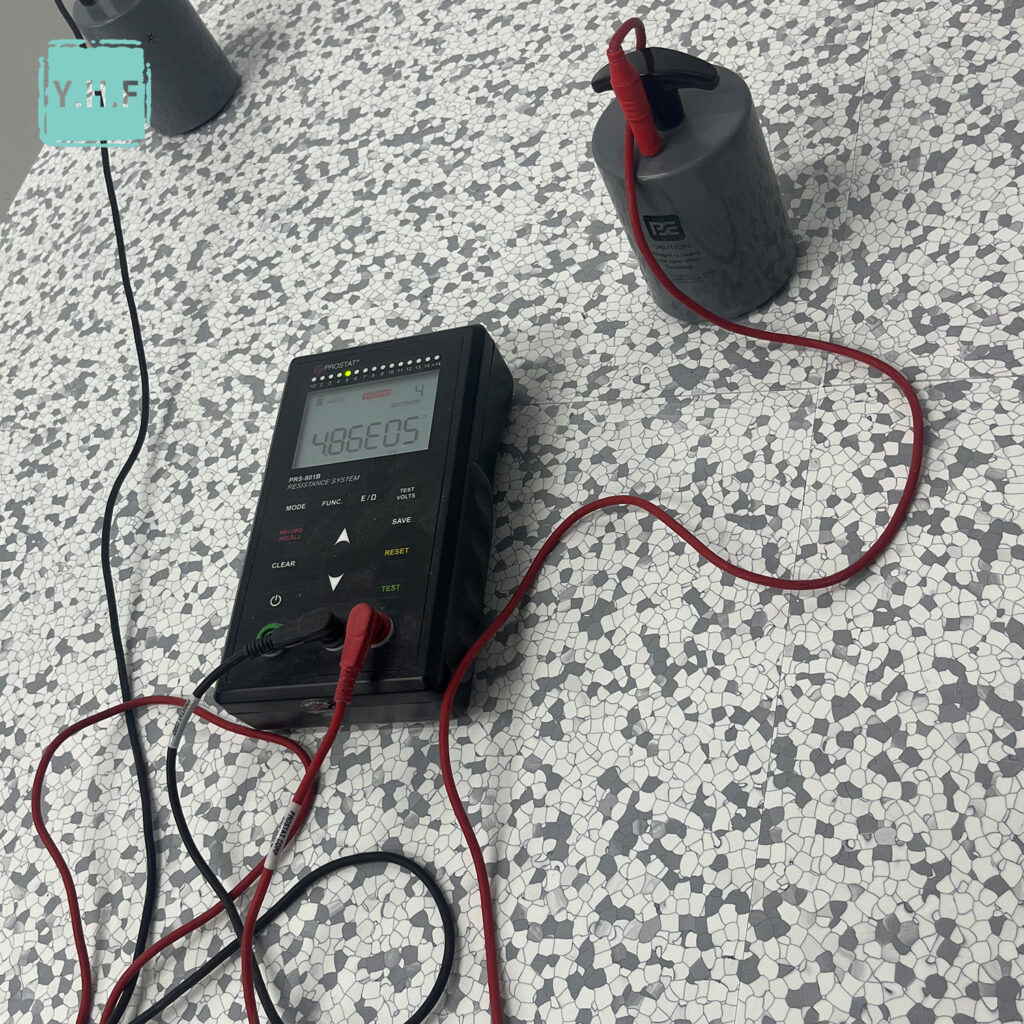
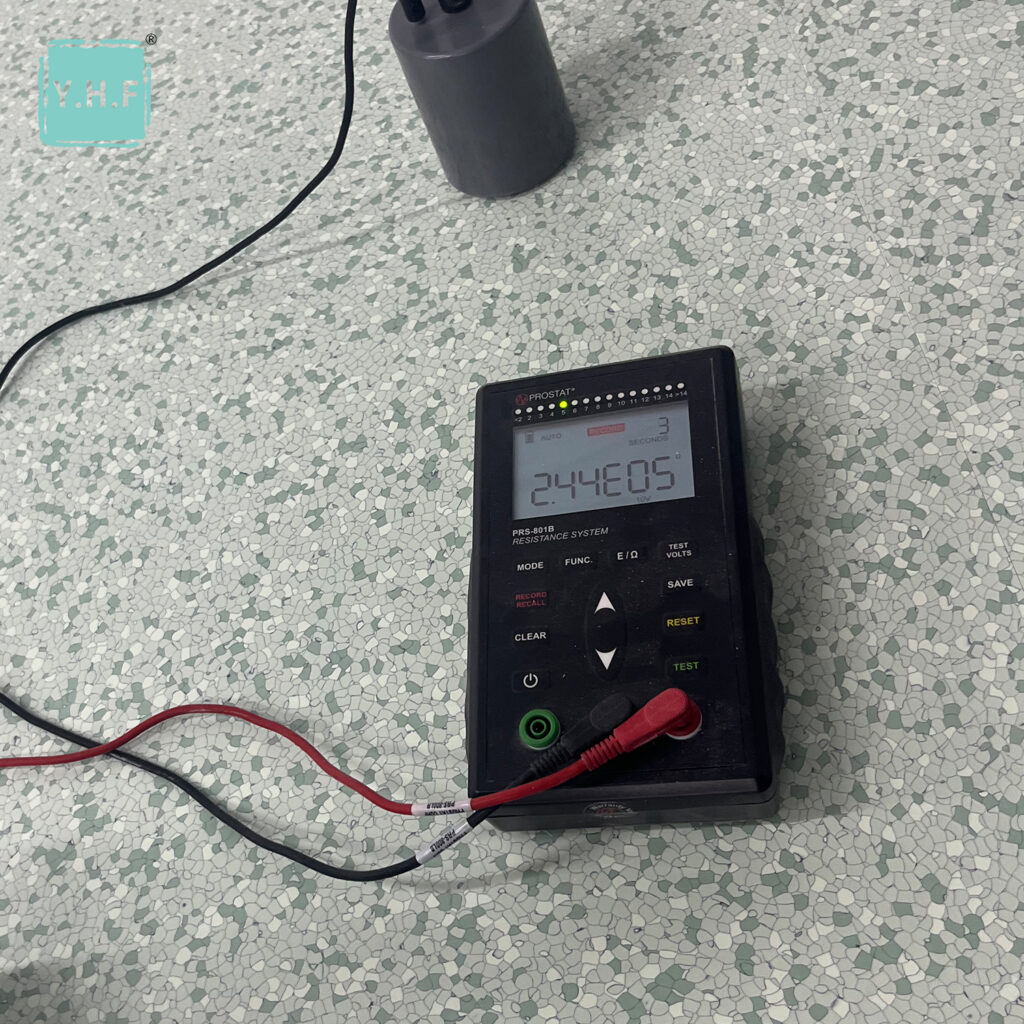
Conductive flooring is designed to transfer electrical charges to ground as quickly as possible.
Key Characteristics
- Resistance: 10⁴–10⁶ Ω
- Fast static discharge
- Lowest electrical resistance among ESD floors
- Requires conductive adhesive and grounding system
Typical Applications
- Semiconductor manufacturing
- Microchip production
- Aerospace electronics
- Cleanrooms with highly sensitive equipment
- Data centers with strict ESD requirements
What Is Static Dissipative Flooring?
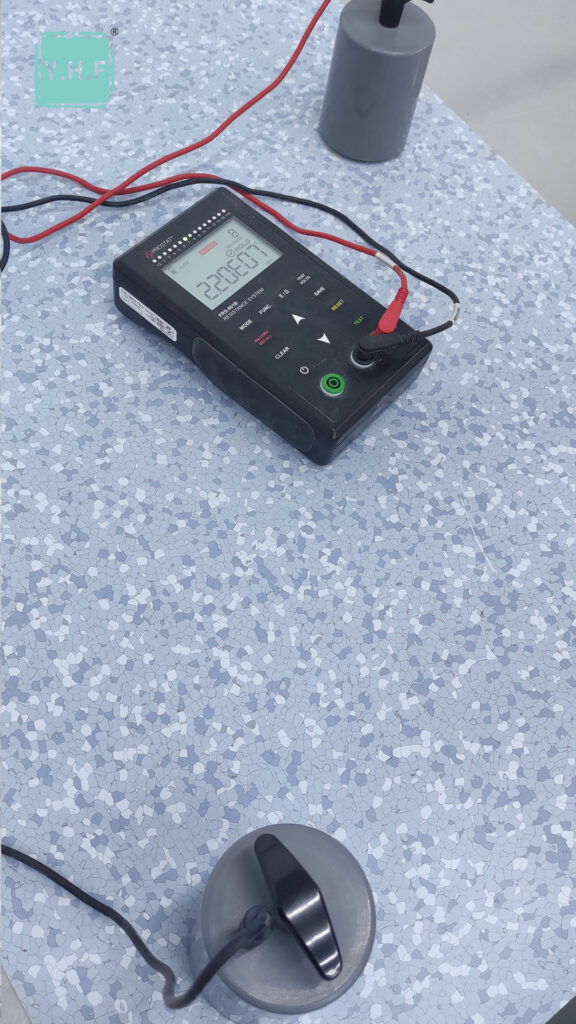
Static dissipative flooring controls static electricity through a slower and more controlled discharge process.
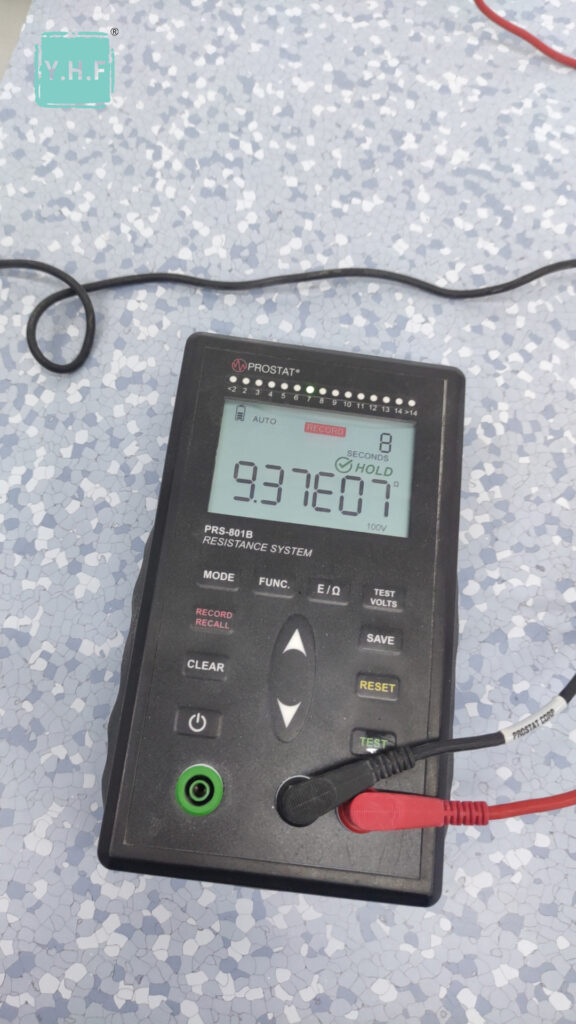
Key Characteristics
- Resistance: 10⁶–10⁹ Ω
- Controlled static dissipation
- Reduces sudden discharge events
- Comfortable and widely used in industrial environments
Typical Applications
- Electronics assembly plants
- PCB manufacturing
- Medical device production
- Pharmaceutical facilities
- General ESD-protected areas (EPA)
Conductive Flooring vs Static Dissipative Flooring
| Feature | Conductive Flooring | Static Dissipative Flooring |
|---|---|---|
| Resistance Range | 10⁴–10⁶ Ω | 10⁶–10⁹ Ω |
| Discharge Speed | Very Fast | Controlled |
| Static Protection Level | Highest | High |
| Application Sensitivity | Extremely Sensitive Equipment | General Electronics Manufacturing |
| Installation System | Conductive Adhesive + Copper Foil | Conductive Adhesive + Copper Foil |
| Maintenance | Low | Low |
Which ESD Flooring Should You Choose?
Choose Conductive Flooring If:
✓ Your facility manufactures semiconductors
✓ You handle highly sensitive microelectronic components
✓ Fast charge dissipation is required
✓ Your customer specifications require resistance below 10⁶ Ω
Choose Static Dissipative Flooring If:
✓ You operate an electronics assembly line
✓ You need reliable ESD protection for daily manufacturing
✓ Controlled discharge is preferred
✓ Your facility follows standard EPA requirements
Why ESD Flooring Matters
A properly designed ESD flooring system can:
- Prevent costly product failures
- Improve production reliability
- Meet ANSI/ESD and IEC standards
- Protect sensitive electronic equipment
- Reduce maintenance and replacement costs
Whether you choose conductive or static dissipative flooring, proper installation, grounding, and routine testing are essential for long-term ESD performance.
Frequently Asked Questions
Is conductive flooring better than static dissipative flooring?
Not necessarily. Conductive flooring provides faster charge dissipation, while static dissipative flooring offers controlled discharge. The best choice depends on your application and ESD requirements.
What resistance range is considered ESD flooring?
Most ESD flooring systems fall between 10⁴ and 10⁹ ohms, depending on the flooring type and application requirements.
Can static dissipative flooring be used in electronics manufacturing?
Yes. Static dissipative flooring is widely used in electronics assembly, PCB manufacturing, and other ESD-protected areas.
Does ESD flooring require grounding?
Yes. ESD flooring must be installed with a proper grounding system to achieve effective static control performance.