
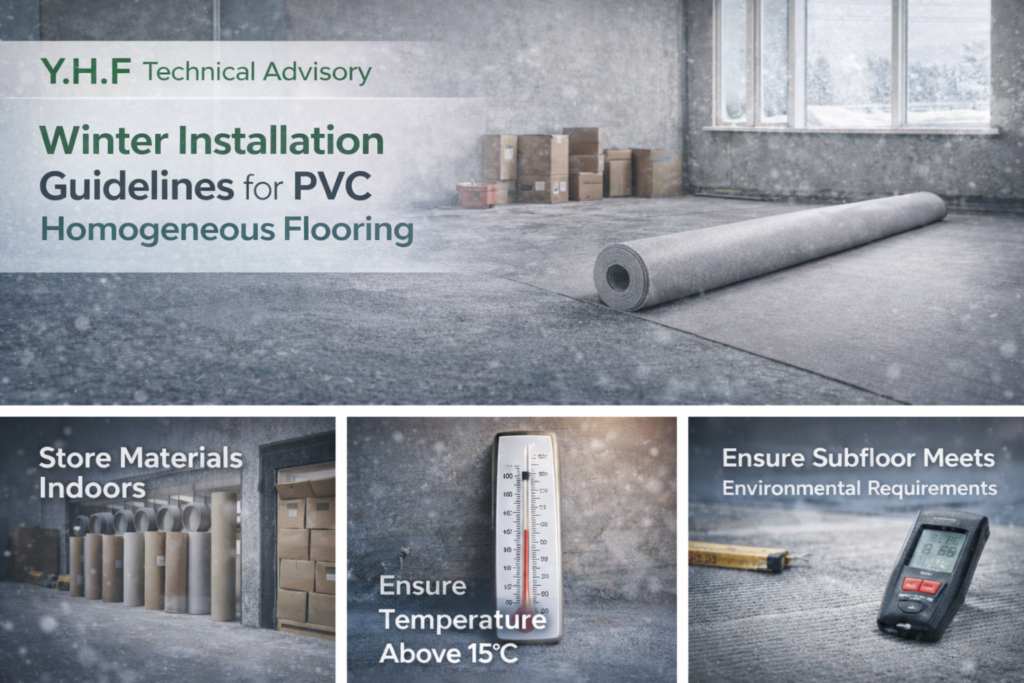
Y.H.F Technical Advisory
As part of Y.H.F’s commitment to product performance and installation quality, we would like to share the following important reminders for PVC homogeneous flooring installation during winter conditions.
Low temperatures can significantly affect material performance, adhesives, and subfloor systems. Please carefully follow the guidelines below to ensure a successful and durable installation.
Transportation and Handling of PVC Flooring
During winter, ambient temperatures are low, and PVC materials become less flexible.
Special care must be taken during transportation, unloading, and handling to avoid cracking, edge damage, or deformation. Rough handling and impact must be strictly avoided.
Storage Requirements
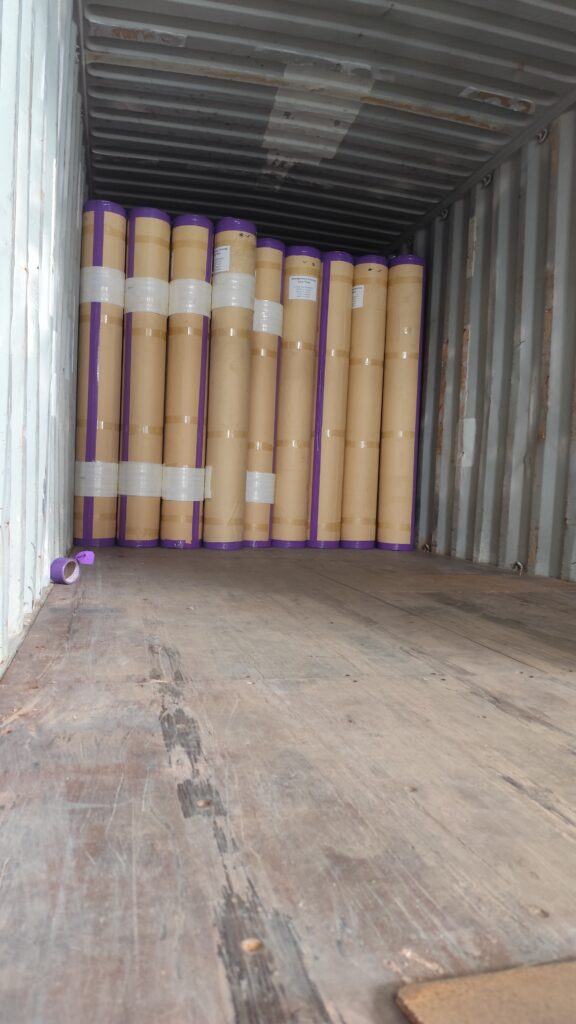
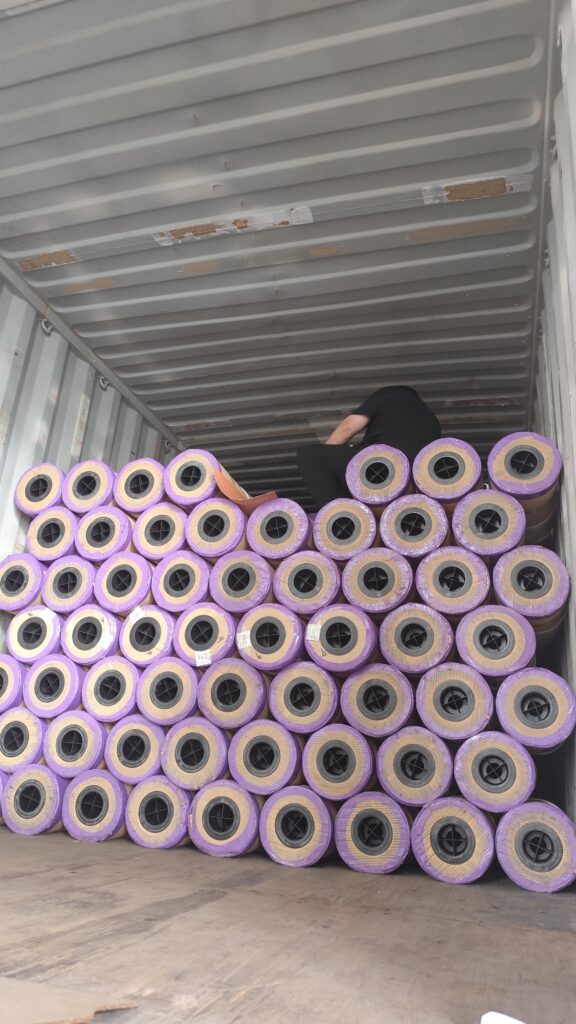
PVC flooring materials must be stored indoors at all times. Rolls should be kept upright and intact, without stacking or bending, and appropriate safety measures should be in place to prevent damage.
Outdoor storage or exposure to cold environments is not permitted.
Effect of Temperature on PVC Flooring Installation
- The installation site temperature must be above 15°C.
- When the ambient temperature is below 10°C, installation of resilient PVC flooring is strictly prohibited.
Low temperatures negatively affect material flexibility, adhesive curing, and overall bonding performance.
Environmental Requirements for Resilient Flooring Installation
To ensure optimal installation quality, the following conditions must be met:
- Air temperature: ≥ 18°C
- Relative humidity: 40% – 70%
- Subfloor surface temperature: ≥ 15°C
Subfloor Moisture Content Limits
- Fine concrete: ≤ 3.5%
- Cement screed: ≤ 2.0%
- Underfloor heating systems: ≤ 1.8%
Subfloor Flatness & Strength
- Flatness tolerance: ≤ 2 mm over 2 m
- Subfloor tensile bond strength: ≥ 1.0 MPa
A stable, dry, clean, and smooth subfloor is essential for long-term flooring performance.
Effect of Temperature on Auxiliary Materials
5.1 Primer: Primers are water-based emulsions.
When applied in environments below 5–8°C, primers may fail to form a proper film and instead turn into powder after drying. This prevents penetration and sealing of the subfloor, leading to weak bonding between self-leveling compounds and the substrate, which may later cause debonding, hollow sounds, or cracking.
5.2 Self-Leveling Compounds
Low temperatures significantly extend drying time and may even cause freezing. This prevents proper hydration and curing, resulting in insufficient surface strength, dusting, cracking, or delamination.
When heating is used to raise indoor temperature, attention must also be paid to relative humidity.
Excessively dry air can cause water to evaporate too quickly, preventing complete hydration and leading to reduced strength of the self-leveling layer.
5.3 Flooring Adhesives
- Recommended application temperature: above 15°C (optimal ≥ 18°C)
- When indoor temperature falls below 10°C, adhesive bonding strength is severely compromised
This may result in poor adhesion, edge curling, or flooring detachment in later stages. Strict control of adhesive open time is required during installation.
Additional Installation Precautions
6.1 Material Acclimation
Flooring materials must be delivered to the site at least 24 hours in advance and allowed to acclimate to the indoor temperature before unrolling.
6.2 Pre-Installation Layout (Dry Laying)
Materials should be dry-laid prior to installation to release internal stress and allow early detection of defects such as damage or color variation.
6.3 Use of High-Quality Adhesives
High-quality adhesives are essential for ensuring installation performance and reducing the risk of failure.
The use of pressure-sensitive adhesives is strictly prohibited.
6.4 Subfloor Preparation
The subfloor is the foundation of the entire flooring system. Issues such as insufficient strength, sanding dust, cracks, moisture, oil contamination, or unevenness must be properly addressed before installation.
6.5 Heating Methods
Professional heating equipment should be used when necessary. Open flame heating is not recommended.
6.6 Finished Floor Protection
After project completion, proper protection must be applied to prevent damage. Do not cover the floor with materials that are corrosive, abrasive, or prone to color transfer (e.g., printed plastic sheets or patterned fabrics).
Conclusion
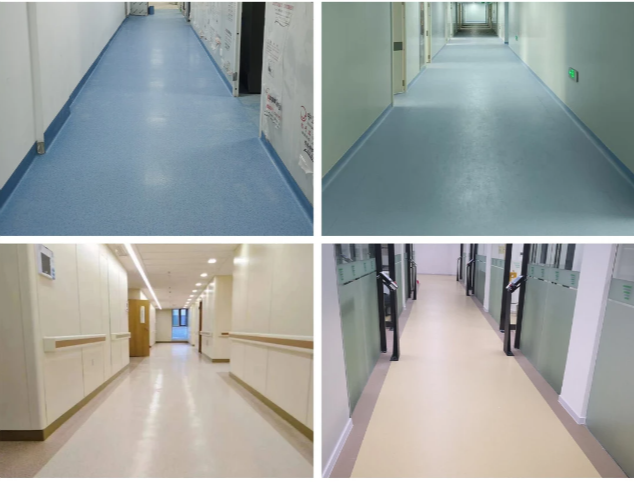
Winter installation requires stricter control of temperature, humidity, materials, and construction procedures. Following these guidelines will help ensure the long-term performance, safety, and appearance of Y.H.F PVC homogeneous flooring systems.
For further technical support, please feel free to contact the Y.H.F technical team.